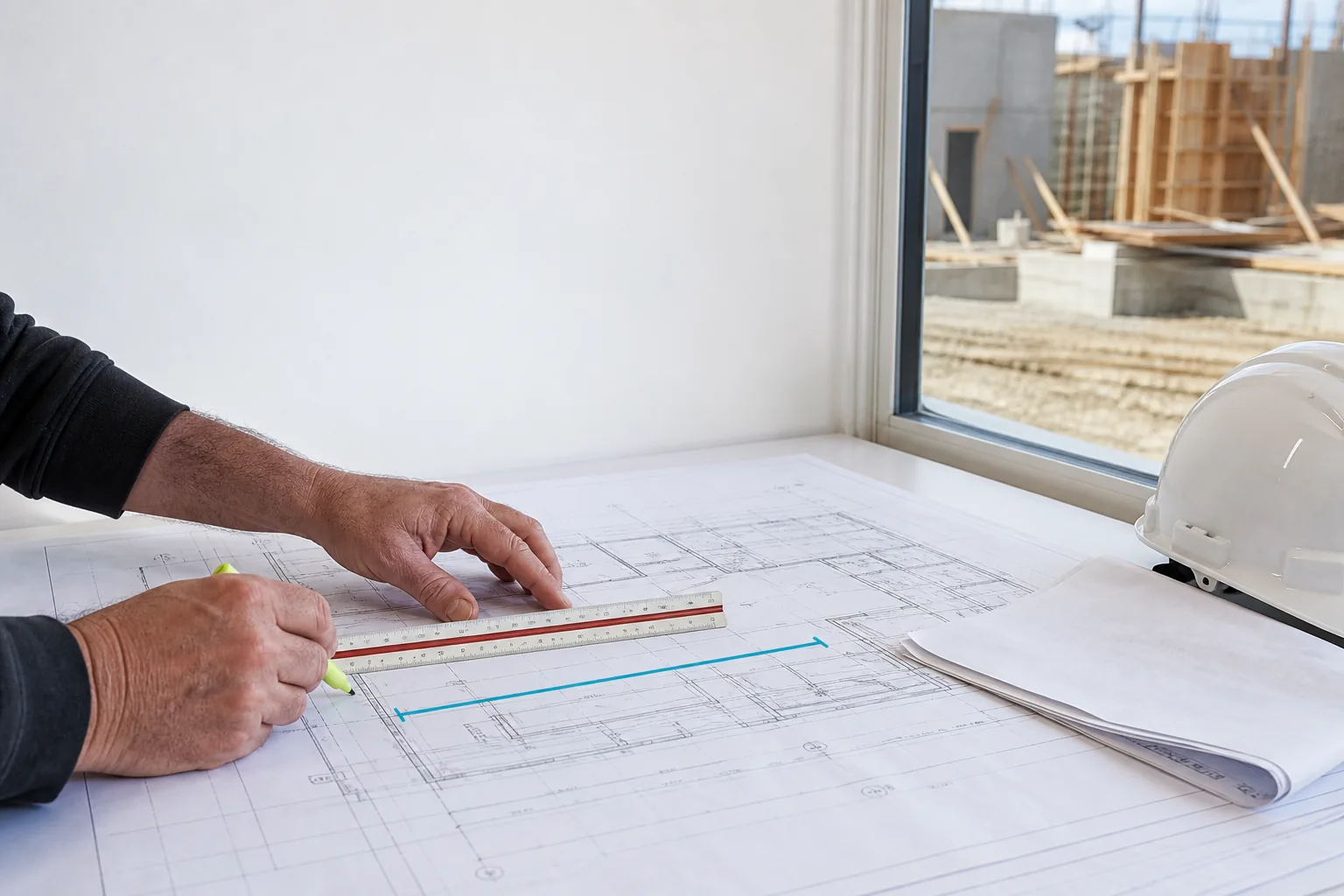
Outsourcing drywall estimating has become a practical shift for contractors dealing with tight bid timelines, rising costs, and limited estimating capacity. Instead of relying solely on in-house resources, many construction businesses now turn to specialized estimating partners for consistent, accurate takeoffs. This approach not only reduces pressure on internal teams but also improves bid performance and overall project outcomes.
In this article, we take a close look at outsourcing drywall estimating benefits, how it affects accuracy, cost control, and bidding performance, and why more contractors are quietly moving in this direction.
Why Estimating Has Become a Bottleneck in Modern Construction
Ask any project manager what slows down bidding today, and estimating usually tops the list. Deadlines shrink, drawing sets grow more complex, and revisions keep coming even after numbers are finalized.
Here’s where things start to break. Estimating teams, especially small ones, end up stretched thin. One estimator handles multiple jobs, switches between trades, and works under constant time pressure. Outsourcing addresses the headcount side, though the accuracy cost of a shrinking calendar is worth reading up on before your next award date. The result isn’t always obvious at first. A missed detail here, a slightly off quantity there. But those small gaps compound quickly.
And that’s exactly where outsourcing drywall estimating benefits start to make a difference. Not as a shortcut, but as a way to stabilize a process that has become increasingly difficult to manage internally.
Outsourcing Drywall Estimating Benefits
Outsourcing drywall estimating isn’t about handing off responsibility. It’s about bringing in a structured, repeatable process that delivers consistent results regardless of workload.
When a contractor works with an external estimating firm, the process becomes less reactive. Instead of scrambling to meet deadlines, estimates follow a defined workflow, review, takeoff, verification, and delivery. That consistency is where most of the value sits. A quick comparison helps clarify the shift:
| Estimating Approach | Typical Outcome |
| Internal, time-pressed estimating | Variable accuracy, slower turnaround |
| Structured outsourced estimating | Consistent quantities, faster delivery |
Another point that often gets overlooked is transparency. Professional estimators don’t just send numbers; they provide breakdowns, marked-up drawings, and notes that help contractors understand how the estimate was built. That level of detail becomes useful later during execution, not just bidding.
Why Contractors Struggle With In-House Estimating
The idea of keeping everything in-house sounds efficient, but the reality tends to be more complicated.
First, there’s the hiring challenge. Skilled estimators are not easy to find, and when you do find them, they come at a cost. Salaries, benefits, and ongoing training add up quickly. Then comes the learning curve. Even experienced hires need time to adjust to company workflows, project types, and software systems.
Then there’s the issue of inconsistency. Two estimators may approach the same drywall scope differently. One might include waste factors more conservatively, another might not. Over time, these differences affect pricing strategy and make it harder to maintain a predictable bid structure.
Another pressure point shows up during peak periods. When multiple bids overlap, estimators are forced to rush. That’s when errors creep in, missing partitions, incorrect quantities, or miscalculated labor costs. And as many contractors have learned the hard way, estimating errors cost construction projects far more than they appear on paper.
Even something as straightforward as calculating the labor cost to hang and finish drywall can vary depending on assumptions. Without a consistent system, those assumptions change from job to job.
Cost Comparison: In-House vs Outsourced Estimating
The financial side often tells the clearest story. In-house estimating carries fixed costs, while outsourcing operates on a flexible model where contractors pay only for what they need.
| Factor | In-House Estimator | Outsourced Estimating |
| Salary & Benefits | High fixed expense | Pay only per project |
| Software Costs | Multiple licenses required | Included in service |
| Training Time | Months or years | Immediate access to expertise |
| Output Capacity | Limited by team size | Scalable on demand |
| Accuracy | Varies by experience | Consistent and precise |
This shift from fixed overhead to variable cost savings allows construction businesses to allocate resources more effectively. Instead of investing heavily in staffing, they can focus on project execution and growth.
How Outsourcing Improves Bid Accuracy and Win Rate
Accuracy isn’t just about getting quantities right. It’s about building confidence into every number that goes into a bid.
Professional estimators approach the estimation process differently. They follow standardized methods, cross-check quantities, and account for factors that are often missed under time pressure, waste, sequencing, access constraints, and material variations.
According to an industrial report, large projects across asset classes typically take 20% longer to finish than scheduled and are up to 80% over budget. That gap often starts at the estimating stage.
When estimates are more precise, pricing becomes more competitive without being risky. Contractors can submit bids with greater clarity, defend their numbers in negotiations, and avoid underpricing.
This is where bid accuracy improvement translates into real results. Over time, contractors using outsourcing estimating services tend to see a noticeable lift in their construction bid win rate, not because they bid lower, but because they bid smarter.
Why Contractors Lose Bids Without Accurate Estimating
Most contractors assume they lose bids because of pricing. In many cases, that’s only part of the story. The real issue often starts earlier, inside the estimation process itself.
When estimates are rushed or inconsistent, small gaps begin to form. A missing partition, underestimated material quantities, or inaccurate labor assumptions may not seem critical at first. But once those numbers reach the final bid, they create either risk or hesitation. Contractors either overprice to stay safe or underprice without realizing it.
Both outcomes lead to lost opportunities. This is where the difference becomes clear. Contractors with structured estimating systems submit bids that are not only competitive but also defensible. They can explain their numbers, justify their scope, and respond confidently during negotiations.
Without that clarity, even experienced contractors struggle. General contractors often compare bids line by line. If something looks unclear or inconsistent, it raises questions. And in a competitive environment, uncertainty is enough to push a bid aside.
This is one of the less obvious but critical outsourcing drywall estimating benefits. It reduces uncertainty. It ensures that every number is backed by a clear process, which directly improves how bids are perceived.
Over time, this consistency plays a major role in improving win rates. Not by lowering prices, but by making bids stronger, clearer, and easier to trust.
Time Savings: Bid More Projects Without Expanding Your Team
Time pressure in estimating doesn’t just affect quality; it limits opportunity. When a team can only handle a certain number of bids per week, anything beyond that gets skipped.
Outsourcing changes that equation. Instead of turning down projects, contractors can keep their pipeline active. Estimates are completed in parallel, not sequentially. That alone increases bidding capacity.
| Weekly Estimating Capacity | Without Outsourcing | With Outsourcing |
| Bids completed | 3–5 projects | 8–12 projects |
| Turnaround time | Slower | Faster |
| Missed opportunities | Frequent | Reduced |
This directly supports a common goal: how to bid for more jobs with a small team. The team remains lean, but output expands.
Access to Professional Estimators and Latest Software
Estimating today relies heavily on software, but tools alone aren’t enough. What matters is how they’re used. Outsourcing provides access to professionals who already work with advanced systems daily. That removes the need for internal training and software management.
| Software | Purpose |
| PlanSwift | Digital takeoffs and measurements |
| OST (On-Screen Takeoff) | Quantity extraction from drawings |
| MeasureSquare | Finish and flooring estimating |
| Edge Estimating | Detailed cost calculations |
When paired with experienced estimators, these tools support highly accurate outputs. For instance, a detailed drywall takeoff doesn’t just measure area; it accounts for layout complexity, framing, and finishing requirements.
Real Impact on Construction Project Profitability
Profitability in construction often depends on how well estimates align with actual costs. Even small discrepancies can lead to budget overruns.
| Scenario | Without Outsourcing | With Outsourcing |
| Material Waste | Frequent | Minimized |
| Labor Miscalculations | Common | Reduced |
| Budget Overruns | Likely | Controlled |
| Profit Margins | Unstable | Predictable |
Accurate estimating supports better planning. It ensures that material costs, labor expenses, and timelines are aligned from the beginning of the construction project.

When Should You Outsource Drywall Estimating?
Timing plays a bigger role than most contractors expect. Outsourcing becomes especially useful during periods of growth. When a business starts taking on larger commercial work, estimating demands increase sharply. Internal systems that worked for smaller projects begin to fall short.
It also becomes relevant when consistency matters more than speed alone. For contractors aiming to standardize their bidding approach, outsourcing introduces a repeatable structure.
Another situation comes up during staffing gaps. Whether due to turnover or temporary overload, relying solely on internal resources can slow down operations. Outsourcing fills that gap without long-term commitment.
Common Misconceptions About Outsourcing Estimating Services
There’s still some hesitation around outsourcing, often based on assumptions rather than experience.
| Misconception | Reality |
| Loss of control | Process remains collaborative |
| Lower quality | Often higher due to specialization |
| Communication issues | Structured workflows improve clarity |
In practice, outsourcing works best when treated as a partnership. The estimating firm adapts to the contractor’s workflow, not the other way around.
Step-by-Step: How Outsourcing Drywall Estimating Works
The process tends to follow a predictable structure.
| Step | Description |
| Plan Submission | Contractor shares drawings and specs |
| Scope Review | The estimator analyzes requirements |
| Takeoff Process | Quantities and materials calculated |
| Final Delivery | Detailed estimate provided |
Each step is designed to ensure clarity. Supporting documents, notes, and marked drawings are usually included, making it easier for project managers to review and apply the estimate.
Choosing the Right Estimating Company
Not every estimating company delivers the same level of reliability. Experience in drywall-specific work matters, especially in commercial environments where scope complexity increases.
A strong estimating partner should be able to align with your workflow, use compatible software, and provide clear documentation. Turnaround time is important, but so is consistency.
Contractors exploring professional support often review services like drywall estimating to understand what structured estimating looks like in practice.

ROI of Outsourcing Estimating Services
Return on investment is where outsourcing proves its value.
| Investment | Return |
| Estimating Fee | More bids submitted |
| Time Saved | Increased operational efficiency |
| Accuracy | Higher win rate |
| Reduced Errors | Improved profit margins |
In construction, that benefit extends beyond savings; it improves overall performance.
Internal Resource Optimization for Growing Contractors
One of the less obvious benefits of outsourcing is how it reshapes internal operations. Instead of splitting attention between estimating and execution, teams can focus on delivery. Project managers gain more time for coordination, scheduling, and problem-solving on-site.
This shift supports growth without requiring immediate expansion of staff. Contractors can scale gradually, maintaining efficiency while increasing project volume. For a broader view, exploring structured construction estimating approaches can provide additional perspective on how systems improve performance.
Related Estimating Services That Add Value
Drywall estimating rarely exists in isolation. Most construction projects involve multiple trades, each influencing the overall cost structure. Understanding factors like drywall cost helps refine budgeting, while insights from construction takeoff ensure alignment across trades.
In larger projects, integrating flooring, painting, and general estimating creates a more complete picture. This interconnected approach reduces gaps and supports better planning from start to finish.
Why Contractors Are Rethinking Estimating
Estimating has moved beyond being a back-office task. It now plays a direct role in whether a contractor grows or stalls. The outsourcing drywall estimating benefits discussed here point to a larger shift. Contractors are no longer relying solely on internal capacity. They are building systems that support accuracy, speed, and consistency.
For companies looking to stabilize their estimating process and improve bid performance, working with an experienced partner can make a measurable difference.
If you’re considering that step, Quantify North America offers a practical approach built around real contractor workflows, detailed takeoffs, and reliable quantities. Their focus isn’t just on delivering numbers; it’s on helping contractors bid with confidence and execute projects with clarity.