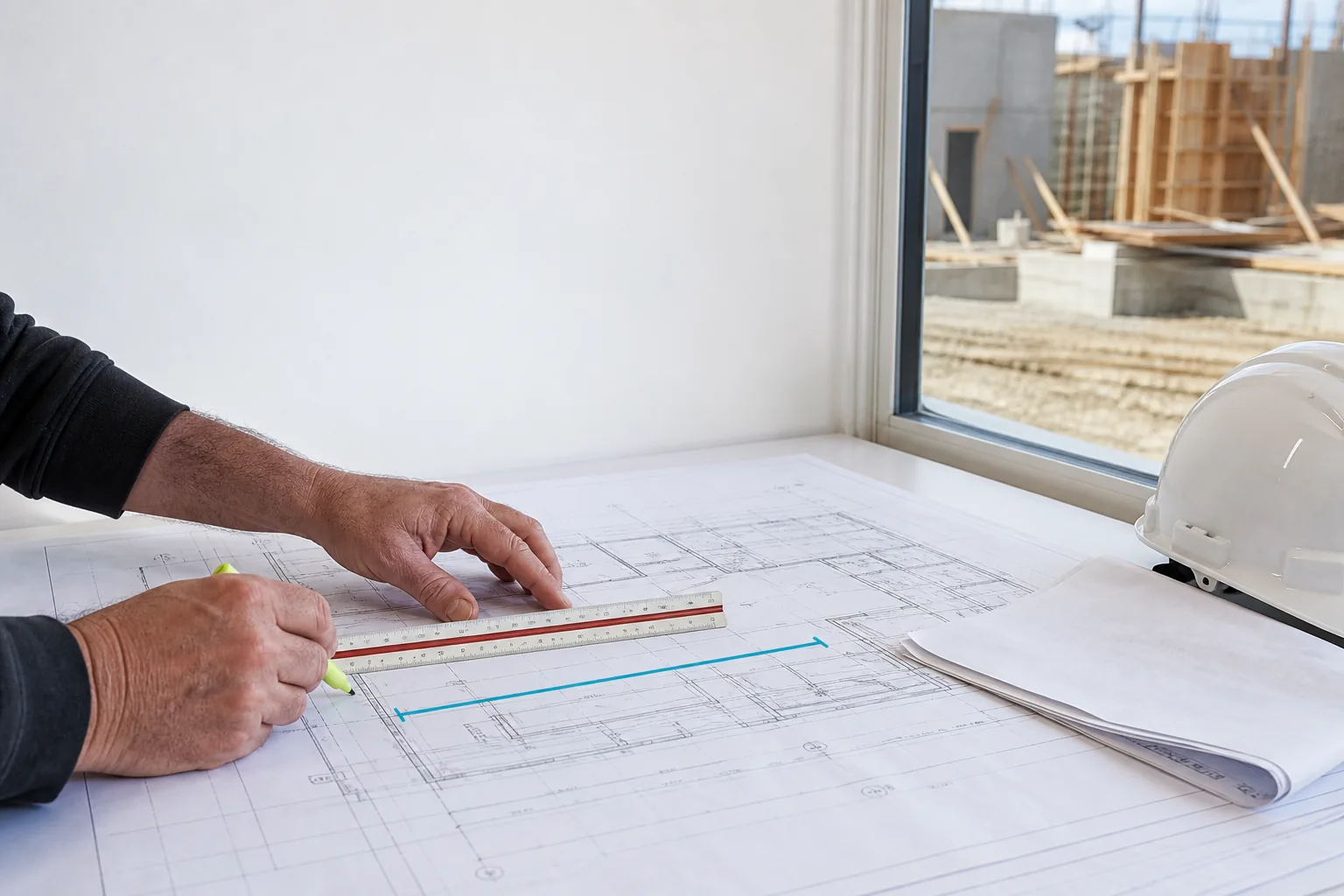
Estimating errors cost construction companies far more than minor budget adjustments. Across the United States, inaccurate estimates disrupt project management, shrink profit margins, and trigger cost overruns that ripple through entire construction projects. When estimates fail, timelines stretch, material costs rise, and credibility erodes long before a project reaches closeout.
In this article, we examine how estimating errors cost construction projects at every stage, why these mistakes occur so frequently, and what practical steps contractors can take to reduce risk, protect margins, and improve estimate reliability in today’s market.
What Estimating Errors Cost Construction Projects in Practical Terms
Estimating errors cost construction firms at every stage of the project lifecycle. A construction estimate is not merely a bid number; it sets expectations for labor deployment, material procurement, cash flow, and scheduling. When estimates can lead to incorrect assumptions, the result is often a cascade of financial strain rather than a single isolated issue.
Construction estimates typically rely on projected labor productivity rates, material quantities, site conditions, and defined project scope. When even one of these variables is misjudged, the estimate becomes fragile. As costs unfold in real time, the difference between what was projected and what actually occurs widens quickly. Federal data reinforces this reality. The U.S. Government Accountability Office has reported that large construction initiatives regularly exceed original cost estimates, sometimes by more than twenty percent, primarily due to early estimation flaws rather than execution failures. Once a project begins, correcting those assumptions becomes expensive and disruptive.
Why Estimating Errors Cost Construction Firms So Frequently
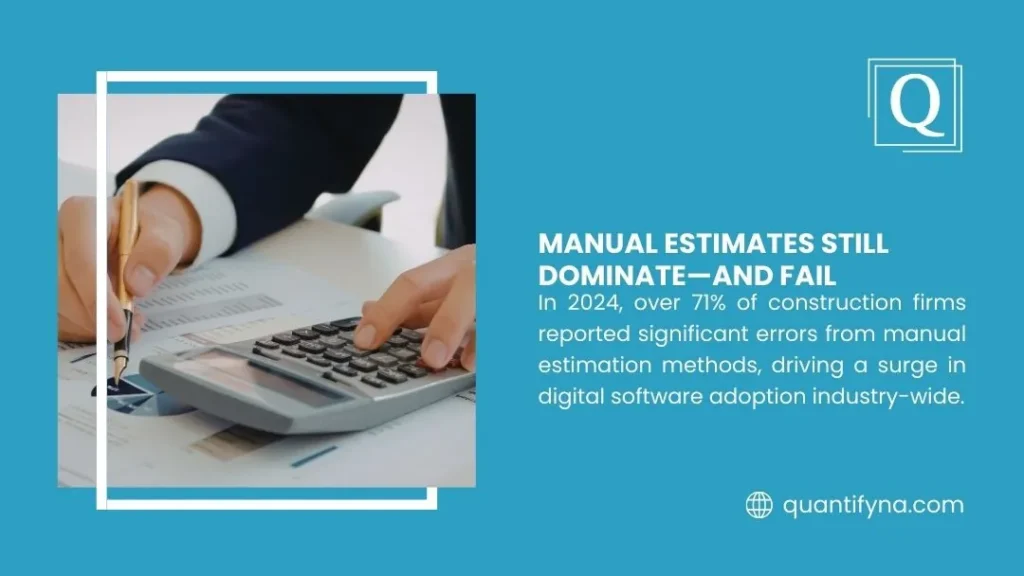
Estimating errors cost construction organizations repeatedly because estimating remains both technical and interpretive. Even with advanced construction estimating software, human error still influences outcomes.
Labor estimation remains one of the most common pressure points. An accurate labor cost depends on realistic productivity rates, regional wage data, and site accessibility. When estimators rely too heavily on outdated historical data, labor shortages or overtime requirements surface mid-project and inflate expenses. These miscalculations rarely appear dramatic at bid time, yet they compound steadily.
Material costs present a similar risk. Volatile pricing, supply chain disruptions, and delayed procurement all distort original assumptions. Without real-time price validation, estimates quickly lose alignment with market conditions. A flooring or drywall estimate built months before procurement can drift significantly from actual purchase costs.
Site conditions also play a quiet but decisive role. Limited site visits, incomplete geotechnical reports, or overlooked access constraints create blind spots. When crews arrive on site and encounter unexpected obstacles, productivity slows, equipment needs change, and costs escalate.
The table below reflects how common estimating failures translate into financial exposure.
| Estimating Variable | Typical Impact on Construction Cost | Resulting Risk |
| Labor productivity assumptions | Underestimated labor cost | Reduced profit margins |
| Material quantity takeoffs | Excess waste or shortages | Schedule delays |
| Incomplete site conditions review | Unplanned equipment or prep | Cost overruns |
| Undefined project scope | Frequent change orders | Contract disputes |
The Measurable Cost of Construction Estimating Mistakes in the USA
Estimating errors cost construction firms billions annually, according to multiple industry studies. Research indicates that nearly nine out of ten construction projects exceed their original budgets. These overruns rarely stem from workmanship alone; inaccurate estimating remains a primary contributor.
Industry research shows that inaccurate cost estimates are a significant contributor to construction project cost overruns, and are regularly identified alongside poor planning and scope changes as core drivers of budget increases in commercial builds.
Cost overruns also reduce long-term competitiveness. Firms that underbid due to estimating errors may win projects initially but struggle to sustain cash flow during execution. Over time, this pattern affects bonding capacity, vendor relationships, and bidding credibility.
How Estimating Errors Cost Construction Projects Beyond Money
Estimating errors cost construction teams more than direct expenses. Project management suffers when estimates fail to reflect actual site conditions or workflow realities. Crews face constant schedule revisions. Procurement teams scramble to adjust material orders. Supervisors divert attention from quality control to damage control.
Client trust also erodes. Owners expect transparency and predictability. When estimates fall apart, disputes emerge, even when contracts allow for adjustments. These conflicts consume time and resources long after construction concludes.
In sectors such as flooring, drywall, and painting, where margins are often narrow, even minor estimating mistakes can determine whether a project finishes profitably or at a loss. Accurate takeoff software helps, but technology alone cannot replace disciplined estimating practices.

Reducing the Risk of Construction Estimating Errors
Estimating errors cost construction firms less frequently when structured processes guide estimation. The most effective estimators combine construction estimating software with verified historical data, documented site visits, and peer review.
Reliable takeoff software improves quantity accuracy, yet it must align with realistic productivity assumptions. Estimators who validate labor output against recent project data produce estimates that withstand real-world conditions. This approach improves the ability to accurately estimate labor cost without relying on optimistic averages.
A clear definition of project scope also reduces exposure. Estimates tied closely to specifications, drawings, and inclusions limit ambiguity during execution. When scope clarity improves, change orders decline, and cost overruns become less frequent.
Many contractors now rely on specialized estimating partners to support internal teams. Professional services focused on construction estimating provide an additional layer of review, reducing human error and improving confidence in bids. Construction takeoff and materials estimating methods help standardize accuracy across trades.
How Specialized Estimating Support Changes Outcomes
Outsourced or dedicated estimating services increasingly serve as a risk-management tool rather than a cost center. Firms that integrate external expertise into their estimating workflow often report fewer budget surprises and improved bid accuracy.
For example, contractors seeking detailed guidance on construction estimating processes benefit from structured methodologies explained through comprehensive construction estimating guides. Trade-specific services, such as flooring estimating or drywall estimating, further refine accuracy by focusing on material behavior, labor sequencing, and installation variables unique to each scope.
The following table illustrates how professional estimating practices reduce exposure.
| Estimating Approach | Cost Control Outcome | Project Stability |
| Manual estimating only | High variability | Frequent overruns |
| Software without review | Moderate improvement | Inconsistent |
| Specialized estimating services | Higher accuracy | Predictable costs |
Why Estimating Discipline Protects Profit Margins
Estimating errors cost construction firms repeatedly when estimation lacks structure. Accurate estimates protect profit margins by aligning expectations with execution. They allow project managers to allocate resources efficiently and respond to challenges without financial shock.
In competitive U.S. markets, firms that consistently estimate well outperform those that rely on intuition or outdated data. Accurate estimating does not eliminate risk, but it reduces uncertainty to manageable levels.
Companies that invest in better estimating processes, training, and support also improve bid confidence. Rather than winning work through aggressive pricing, they win through realistic, defensible numbers.

Conclusion: A Smarter Way Forward for Construction Firms
Estimating errors cost construction firms because estimation often receives less attention than execution. Yet the estimate determines whether a project succeeds long before crews mobilize. Firms that treat estimating as a strategic discipline rather than an administrative task position themselves for long-term stability.
Contractors serious about improving accuracy should rely on proven construction estimating resources and experienced estimating partners who understand trade-specific risk, labor behavior, and real-world site conditions. When estimates reflect how projects actually perform in the field, cost overruns decline, and profit margins hold.
If your firm is ready to reduce risk, protect margins, and submit bids with confidence, partnering with specialists like Quantify North America’s construction estimating experts can provide the precision and consistency modern projects demand.
When estimating errors decline, projects stabilize, margins recover, and growth becomes sustainable. That shift starts with recognizing the true cost of poor estimating and choosing to correct it before the next bid goes out.