
If you’re wondering how to bid more jobs with small team, here’s the uncomfortable truth: most contractors don’t lose bids because they lack skill. They lose them because estimating capacity collapses under pressure. This guide explains what actually works when staff is limited, deadlines are brutal, and the bottom line still matters.
How to Bid More Jobs With Small Team Without Sacrificing Accuracy
Knowing how to bid more jobs with small team starts with accepting one fact that most contractors avoid. Bidding volume has a ceiling, and that ceiling has nothing to do with motivation. It has everything to do with estimating hours, accuracy, and turnaround speed. When a team tries to force more bids through the same bottleneck, quality slips, errors creep in, and invitations to bid quietly stop coming.
That’s why learning how to bid more jobs with small team isn’t about hustle. It’s about math, process, and restraint.
Why Small Construction Teams Hit a Bidding Wall
Construction job bidding doesn’t scale linearly. One estimator handling five bids a week can’t magically handle ten without consequences. We tackle how to bid fast without guessing in a guide built for exactly that squeeze. The hours don’t compress. The drawings don’t simplify. And the job site realities don’t get friendlier.
According to the Construction Industry Institute, rework caused by estimating and scope errors accounts for up to 12 percent of total construction cost, a number that hits small contractors hardest because margins are thinner.
So here’s what happens. Teams rush. Assumptions replace takeoffs. Labor factors get reused from old jobs. Suddenly, bids go out faster, but accuracy collapses. And that’s why many contractors feel busy yet stagnant.
How Contractors Bid Jobs When Staff Is Limited
To understand how to bid more jobs with small team, you need to look at how contractors actually bid jobs today.
Most rely on one of three approaches. First, the owner estimates at night. Second, the estimator multitasks between bids and active jobs. Third, templates replace judgment. None of these approaches scales.
Contractor job bidding works only when the estimating remains deliberate. Once speed replaces thinking, bids may go out, but wins dry up.
Estimating Capacity vs. Bid Volume
Here’s what I found after reviewing real estimating workflows across small teams.
| Estimating Hours Available | Average Bids per Month | Accuracy Risk |
| 40 hours | 6–8 bids | Low |
| 60 hours | 10–12 bids | Moderate |
| 80+ hours | 14–16 bids | High |
The table explains why learning how to bid more jobs with small team requires capacity planning, not optimism. More bids only help if accuracy holds.
Why Accuracy Decides Who Keeps Getting Invitations to Bid
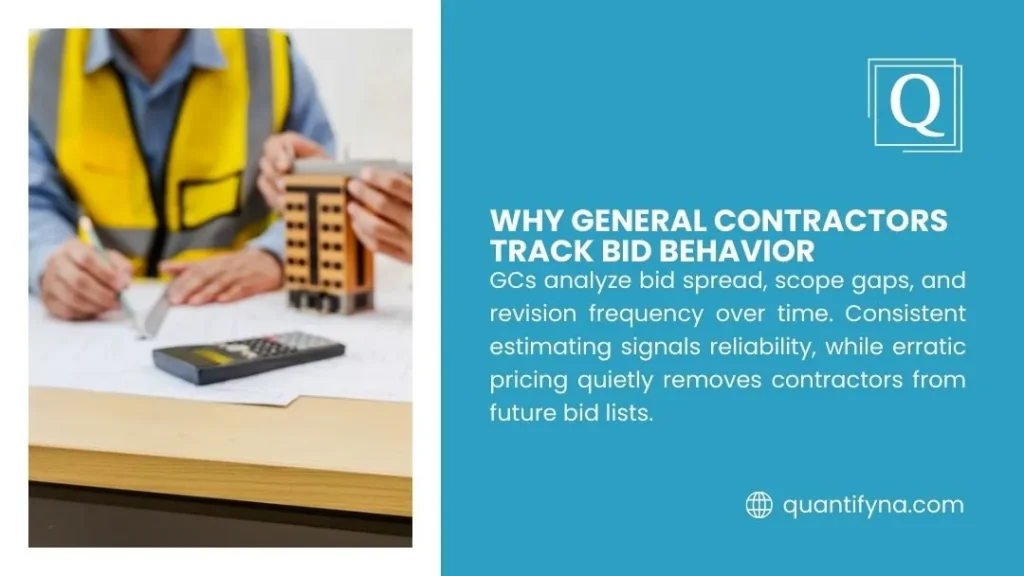
General contractors rarely explain why invitations stop arriving. They don’t need to. They track bid spread, scope gaps, and revision frequency. When a contractor’s numbers fluctuate too much, trust erodes.
This is where construction estimating discipline matters. Detailed takeoffs, consistent labor assumptions, and documented exclusions protect credibility. Contractors who rely on structured construction estimating processes tend to stay on bid lists longer than those who rush. That’s also why many firms quietly rely on specialized construction estimating services when internal teams reach capacity.
How to Bid Construction Jobs Faster Without Cutting Corners
Speed doesn’t come from rushing. It comes from repetition and structure.
Contractors who understand how to bid construction jobs efficiently standardize scope reviews, separate takeoff from pricing, and reuse labor databases instead of reinventing them. This reduces friction without reducing thought.
Using a defined construction takeoff workflow allows estimators to focus on judgment rather than line counting. That shift alone can increase bid output without degrading quality.
Commercial Construction Bidding Changes the Equation
If you’re trying to figure out how to bid on commercial construction jobs with a small team, the stakes rise fast. Commercial drawings are denser. Specs are longer. Risk transfers differently.
Bidding commercial construction jobs requires more documentation, more coordination, and more scrutiny. That’s why many small firms underestimate the labor required just to bid.
The contractors who succeed here don’t bid on everything. They prequalify opportunities, control scope creep, and rely on structured estimating support rather than improvisation.
The Hidden Cost of Rushed Estimating
Here’s the problem nobody wants to say out loud. Estimating errors doesn’t always lose bids. Sometimes they win them. And that’s worse.
Underbidding creates production stress, damages relationships, and bleeds profit. According to the latest labor productivity data, 79 % of contractors say they could improve labor productivity by 6 % or more with better management, highlighting how planning and execution gaps, not field crew performance, are central to margin pressure.
That’s why bidding construction jobs without enough staff doesn’t just reduce win rates. It quietly damages the bottom line.
When Outsourcing Estimating Starts Making Financial Sense
Outsourcing isn’t a shortcut. It’s a capacity tool. Contractors who explore outsourcing construction estimating often do so after calculating the real cost of missed bids, rushed estimates, and estimator burnout. When internal teams can’t keep up, outsourcing allows firms to bid more jobs with a small team while protecting accuracy.
Understanding the ROI of outsourcing estimating helps contractors decide when outside support stabilizes growth instead of complicating it.
Estimating Methods That Scale for Small Teams
Not all estimating methods support growth. Some collapse under volume. Bottom-up estimating works well for detailed bids but requires time. Top-down estimating helps early decisions but lacks precision. Smart teams blend approaches based on the bid stage, using structured estimating tools to maintain consistency.
Choosing the right estimating method isn’t academic. It determines whether a small team can sustain higher bid volume without chaos.
Bid Volume vs. Win Rate Reality Check
More bids don’t automatically mean more work.
| Monthly Bids | Average Win Rate | Jobs Won |
| 8 | 30% | 2–3 |
| 12 | 22% | 2–3 |
| 16 | 15% | 2–3 |
This table explains why contractors obsessed with bid volume often feel stuck. Without accuracy and trust, win rates fall as bids increase.
Learning how to bid more jobs with small team means protecting the win rate while expanding output.
Why Better Takeoffs Increase Bid Invitations
Accurate takeoffs do more than price jobs. They signal professionalism. When contractors submit clean, complete bids with clear scope coverage, GCs notice. Over time, those contractors receive more invitations to bid. That’s how estimating quality indirectly increases opportunity flow.
Using structured drywall takeoff processes, flooring takeoffs, or painting quantity methods creates consistency that GCs rely on.
The Role of Cost Transparency in Winning More Work
Labor assumptions matter. So do material allowances. Contractors who understand drywall cost behavior, labor cost to hang and finish drywall, or flooring unit pricing avoid surprises that derail projects.
Clear assumptions protect relationships. And relationships drive repeat work. That’s why experienced teams rely on reliable materials estimating instead of guesswork when bidding under pressure.
How Small Teams Can Sustain Growth Without Burnout
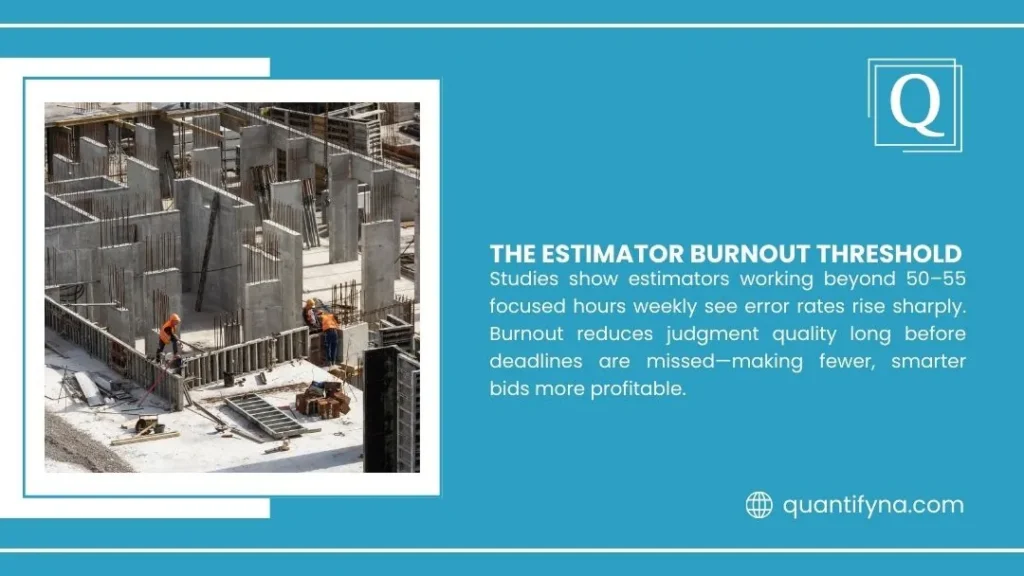
Here’s the thing. Sustainable growth doesn’t feel frantic. Contractors who figure out how to bid more jobs with small team focus on predictability. They limit bid intake. They standardize workflows. They lean on external estimating support when needed. And they protect the estimator’s focus at all costs. That’s how bidding becomes repeatable instead of reactive.
Where Professional Estimating Support Fits In
Some firms try to solve the estimating overload with software alone. Others hire prematurely. The middle ground often works best. Specialized estimating partners can supplement internal teams during peak periods, complex bids, or commercial pursuits. This approach allows contractors to bid on more jobs with a small team while maintaining quality control. Firms that rely on experienced estimating professionals often report improved bid accuracy, steadier win rates, and fewer post-award surprises.

A Smarter Path Forward
Learning how to bid more jobs with small team doesn’t require heroics. It requires honesty. When estimating capacity aligns with opportunity flow, bids improve. When accuracy stays intact, trust builds. And when trust builds, invitations follow.
If your team feels stretched, it’s not a weakness. It’s a signal. Addressing it strategically can help you bid more construction jobs, protect margins, and grow without losing sleep.
If you want to explore structured estimating support that fits your workflow, reviewing professional construction estimating services can help clarify what support actually costs and when it makes sense.
For contractors serious about scaling without chaos, connecting with experienced estimating specialists through a trusted construction estimating partner can be the next rational step.