Finding qualified estimators has become one of the hardest hiring problems in construction. Contractors need people who can read drawings, review specs, measure quantities, understand labor, use estimating software, spot risk, and still meet bid-day deadlines without turning the whole office upside down. That’s a tall order.
A good construction estimator protects more than a number on a spreadsheet. The right estimator protects the margin, the schedule, the handoff to project management, and the contractor’s reputation with general contractors, owners, and design teams. The wrong one can miss scope, overstate quantities, underprice labor, or send a bid out with weak assumptions.
This guide explains how finding qualified estimators works in the real world. It covers what an estimator does, which skills matter, how to write an estimator job description, how to screen potential candidates, when to hire in-house, and when outsourced construction estimating services may be the better move.
Finding Qualified Estimators Starts With Knowing What the Role Really Requires
Finding qualified estimators starts with a basic truth: estimating is not clerical work. It is judgment work.
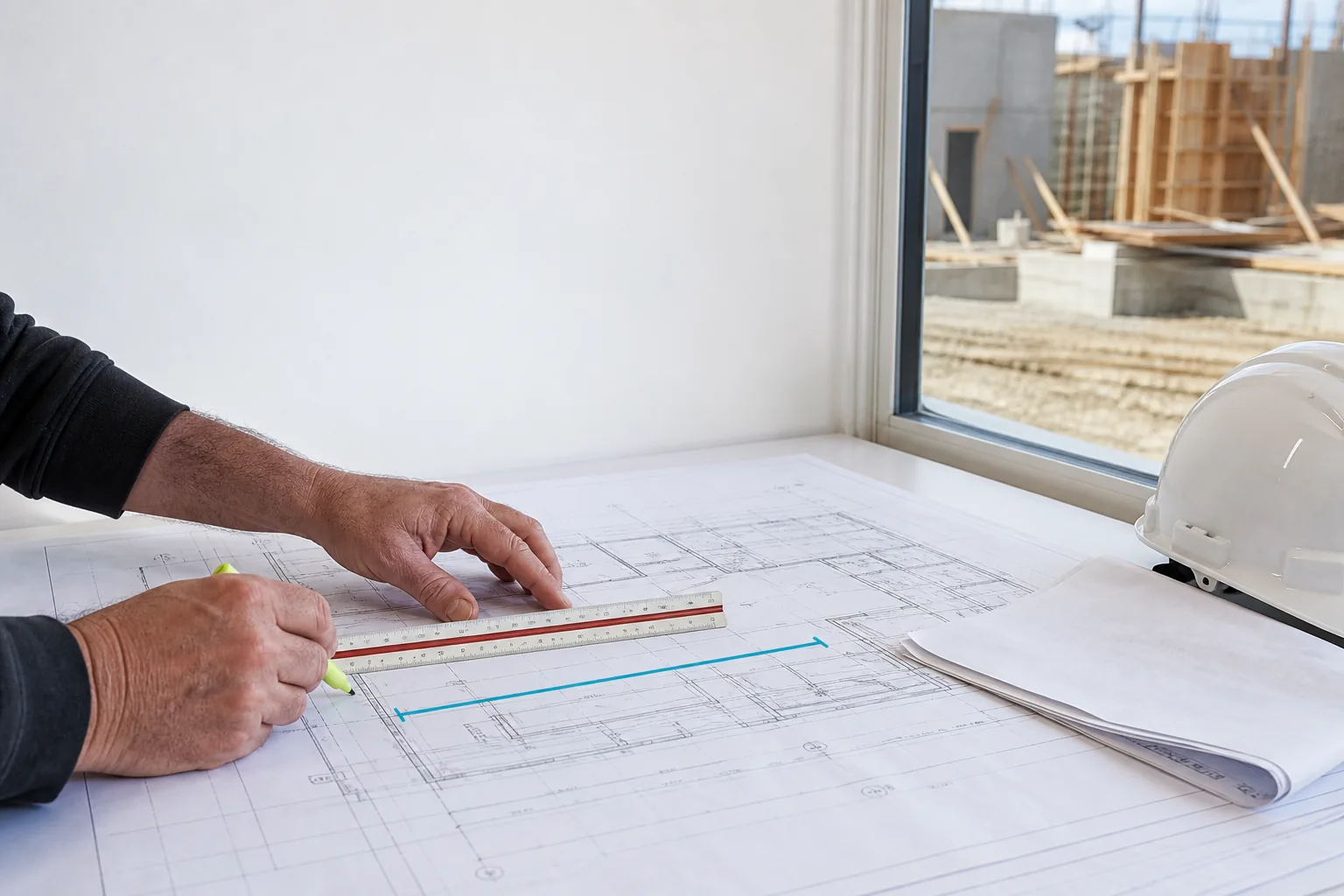
A construction estimator studies bid documents and turns them into cost estimates that a contractor can trust. That sounds simple until the drawing set has missing details, the finish schedule conflicts with the plans, an addendum arrives three hours before bid time, and the estimator still has to produce quantities that make sense.
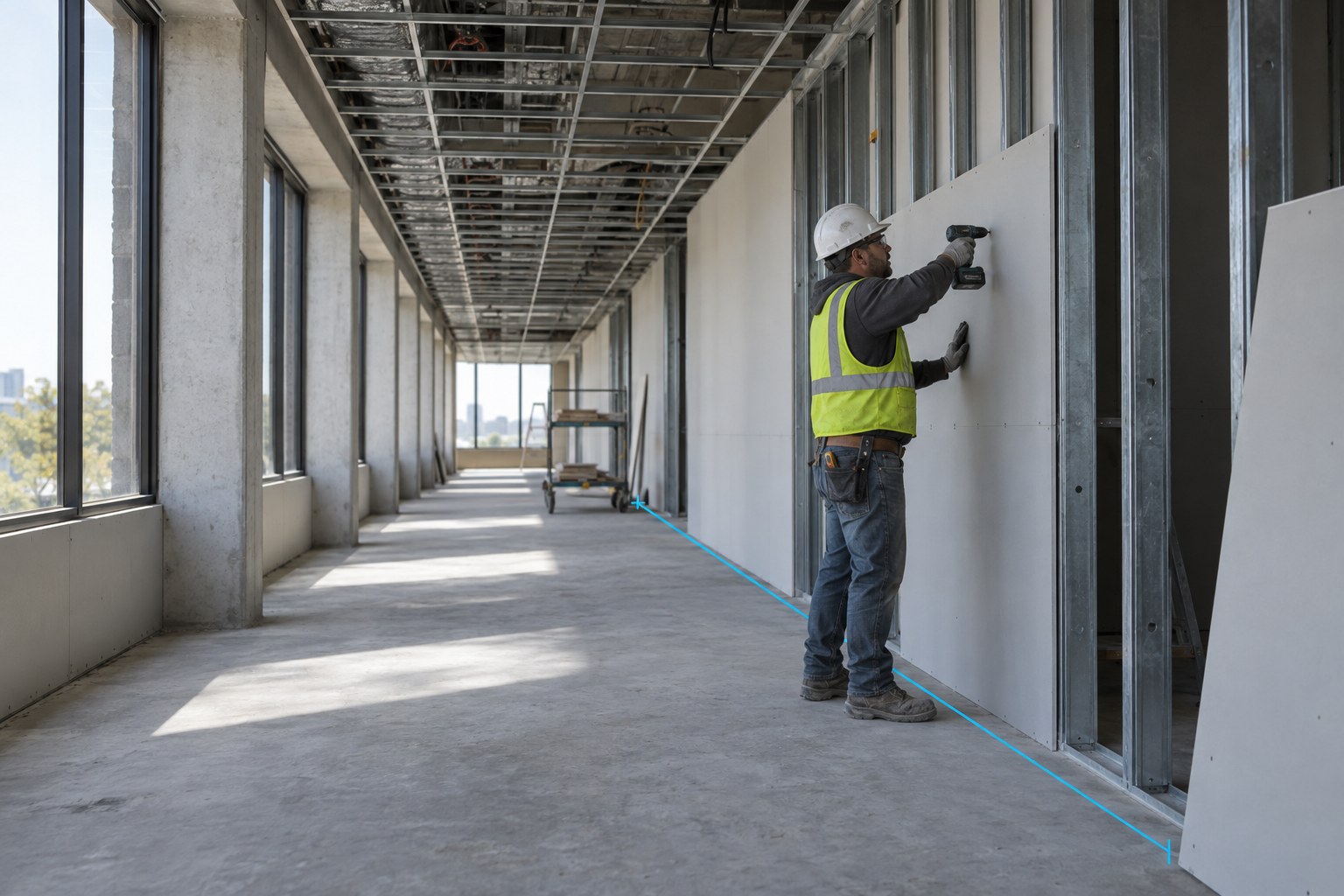
A qualified estimator understands the construction process, not just the software. They know how a trade installs work in the field. They know which notes matter, where scope often hides, and when a quantity looks wrong even though the measurement seems right. This matters in every trade, but it matters even more in commercial flooring, drywall, ceilings, and painting, where one missed wall finish, ceiling height, or coating system can change the entire bid.
That is why finding qualified estimators should never begin with “Who can give me the cheapest takeoff?” It should begin with “Who can help us submit a number we can stand behind?”
Contractors who want a stronger foundation can start with a clear review of construction estimating basics, then match the role to the actual bid workload.
What Does an Estimator Do in Construction?
An estimator in construction reviews project documents and calculates the expected cost of labor, materials, equipment, subcontracted work, overhead, and profit. In day-to-day terms, the estimator reads drawings, checks specifications, completes quantity takeoffs, requests supplier quotes, reviews alternates, prepares scope notes, and helps the team decide whether the job is worth bidding.
The role sits between sales, operations, project management, and accounting. A project estimator may work with a business owner to chase new work, with a project manager to review scope, with vendors to confirm pricing, and with field leaders to check production rates. On larger teams, a chief estimator may oversee several construction estimators and set standards for bid review, handoff, and cost tracking.
For a contractor, the question “what does an estimator do?” is not just educational. It affects hiring. A job estimator who can measure plans but cannot write clean exclusions may not be ready for commercial work. A contractor cost estimator who understands numbers but lacks field experience may struggle with labor estimating. A residential construction estimator may not be the right fit for a large commercial construction estimator role unless they have handled commercial documents before.
The U.S. Bureau of Labor Statistics describes cost estimators as professionals who collect and analyze data to assess the time, money, materials, and labor required for a product or service. That definition is useful because it shows the range of the job: data, time, money, labor, and materials all have to meet in one clear estimate.
A qualified estimator does not just count. They interpret. A contractor can also improve hiring decisions by knowing the difference between a takeoff and a full estimate. A takeoff focuses on quantities. A full estimate uses those quantities to price labor, materials, waste, equipment, overhead, risk, and profit.
Why Contractors Struggle With Finding Qualified Estimators
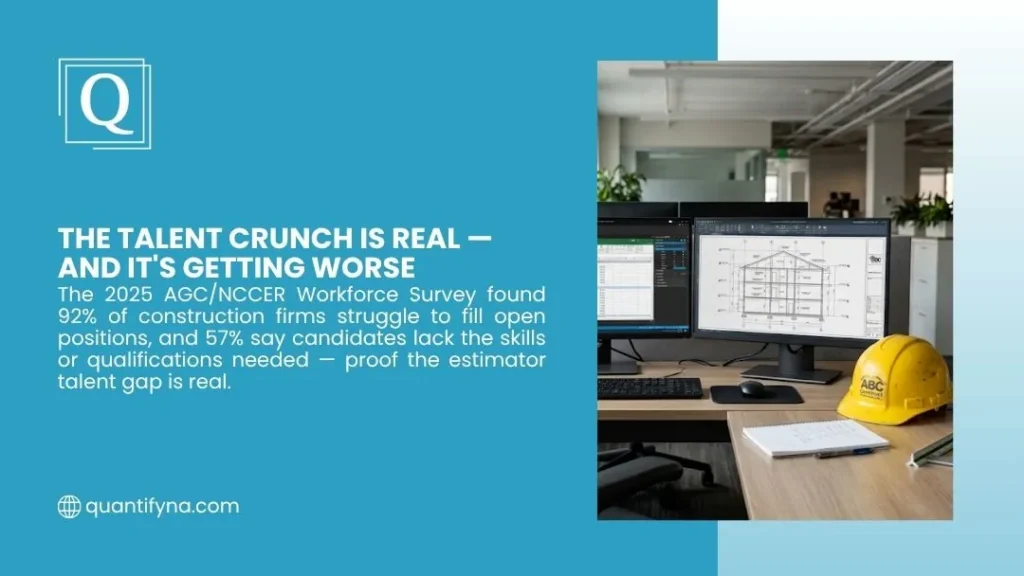
The construction industry has no shortage of people who call themselves estimators. The problem is finding qualified estimators who match the trade, pace, software, and decision-making needs of a real contracting business.
Some candidates know PlanSwift, Bluebeam, MeasureSquare, OST, The Edge, RFMS, or another platform, but they do not know how the work gets built. Others have field knowledge but lack the software skills and document habits needed for consistent cost estimating. Some estimators work well on residential estimating but freeze when faced with a commercial construction project that includes finish schedules, addenda, alternates, multi-floor plans, and strict bid forms.
There is also a labor issue. The U.S. Bureau of Labor Statistics reports that cost estimators had a median annual wage of $77,070 in May 2024. Even though employment is projected to decline from 2024 to 2034, BLS still expects about 16,900 openings for cost estimators each year, mostly due to workers changing occupations or leaving the labor force. In plain English, contractors still need qualified people, and good ones are not always easy to replace.
But here’s the problem: bid deadlines do not care about the hiring market. A contractor may need three estimates this week, five next week, and none the week after. That uneven workload makes full-time hiring risky, especially for small and mid-sized contractors. At the same time, asking owners, PMs, or sales staff to estimate every job can lead to late nights, missed details, and weak bid discipline.
That is one reason many firms compare in-house hiring with outsourcing construction estimating. The right answer depends on bid volume, trade complexity, internal staff, and how much control the contractor needs over the final proposal.
For contractors that specialize in commercial flooring, drywall, ceilings, and painting, the search becomes even narrower. QuantifyNA works in that gap, supporting contractors with trade-specific takeoffs, material quantities, marked plans, and estimating files that fit the way their teams already bid. That kind of support matters when bid volume rises faster than internal estimating capacity.
The Skills That Separate a Good Estimator From a Risky Hire
A strong estimator brings more than arithmetic. The best construction estimators combine strong analytical skills, construction knowledge, software confidence, communication skills, and attention to detail. They can work under pressure, but they do not rush past risk. They can produce numbers, but they can also explain where those numbers came from.
The National Careers Service lists estimator skills such as maths knowledge, attention to detail, analytical thinking, written communication, building and construction knowledge, business management skills, and confident use of software packages. Those skills line up closely with what contractors see on bid day.
Still, not every skill carries the same weight in every company. A flooring contractor may need a commercial estimator with deep knowledge of finish plans, wall tile, transitions, adhesives, waste, and stair details. A drywall contractor may care more about framing, board counts, ceiling assemblies, finish levels, and heights. A painting contractor needs someone who understands coatings, substrates, wall conditions, doors, frames, ceilings, and finish schedules.
The table below can help contractors test for the right skills before a bad hire becomes an expensive lesson.
| Estimator Skill | Why It Matters to Contractors | How to Verify It Before Hiring |
| Blueprint reading | Prevents missed rooms, walls, elevations, ceiling areas, alternates, and finish details. | Give the candidate a real drawing set and ask for a scope summary before they start the takeoff. |
| Trade knowledge | Helps the estimator catch details that generic cost estimators often miss. | Ask about projects in the same trade, size, and delivery style as your typical work. |
| Software skills | Speeds up takeoffs and gives the team files it can review, update, and reuse. | Ask which platforms they use and whether they can provide original files, marked plans, and exports. |
| Analytical judgment | Helps separate a low number from a reliable number. | Ask the estimator to explain assumptions, waste factors, production logic, and pricing risk. |
| Communication skills | Keeps bid notes, exclusions, RFIs, and handoff documents clear. | Review a sample proposal, scope note, or bid clarification. |
| Attention to detail | Reduces missed scope, duplicate counts, and costly bid errors. | Compare their test takeoff with a control estimate or past completed bid. |
A candidate does not need to be perfect in every category. But if they are weak in trade knowledge, vague about assumptions, and unable to provide reviewable files, the risk is too high.
Contractors that rely on digital workflows should also define which estimating tools contractors use before the search starts. Software fit matters more than most job posts admit.
Estimator Qualifications Contractors Should Actually Care About
Estimator qualifications can include a construction management degree, a civil engineering background, field experience, estimating certifications, trade training, or years of project coordination. But the best qualification is proof that the estimator can handle the exact type of work your company bids.
A construction estimating degree may help. A cost estimator degree may help. A candidate with a background as a project cost analyst, cost engineer, estimating engineer, site estimator, or project estimator may also bring useful experience. But construction is practical. The person still has to read your drawings, understand your trade, and return a bid package your team can use.
For entry-level estimator positions, contractors should look for curiosity, discipline, math ability, document control habits, and coachability. Entry-level candidates can grow into excellent estimators if they have strong training and enough project exposure. The risk is time. If the company needs bid-ready support now, an entry-level hire may not solve the immediate problem.
For experienced estimator positions, contractors should ask for evidence. Past project types, sample takeoffs, software files, scope notes, references, and trade-specific questions matter more than broad claims. A candidate who says “I estimate construction costs” should be able to show how they estimate construction costs.
Certifications and professional development are useful signs of commitment. Still, a certified professional estimator salary or title does not guarantee trade fit. A person may know cost estimating construction in theory but still miss commercial flooring details, drywall heights, or painting finish requirements.
The better question is not “Does this person look qualified on paper?” It is “Can this person help us bid the work we actually want to win?”
How to Write an Estimator Job Description That Attracts the Right Candidates
A weak estimator job description attracts weak matches. A strong estimator job description filters the field before interviews start.
Too many contractor job posts say something broad like, “Looking for an estimator to prepare bids and estimates.” That does not tell potential candidates what kind of estimating construction work they will handle. It also fails to separate a residential construction estimator from a commercial construction estimator, a project estimator construction role from a pure takeoff role, or a cost estimator job from a full bid management position.
A better estimator job description should state the trade, project type, software, expected bid volume, deliverables, deadline style, and level of client contact. It should explain whether the estimator will prepare job estimates only, manage vendor quotes, write proposals, attend scope reviews, or support project management after award.
For example, a drywall contractor should mention metal framing, gypsum board, ceilings, insulation, finish levels, addenda review, and bid forms. A flooring contractor should mention takeoffs for carpet, LVT, tile, hardwood, wall finishes, transitions, stairs, and finish schedules. A painting contractor should mention coatings, substrates, doors, frames, ceilings, specialty finishes, and scope notes.
The job post should also name required estimator responsibilities. These may include reviewing plans and specifications, preparing material takeoffs, building cost estimates, requesting vendor quotes, checking labor assumptions, reviewing addenda, preparing bid clarifications, and helping with project handoff.
Contractors that want a clearer bid structure can review a drywall bid template and use it as a model for the level of detail expected from an estimator.
Where to Find Construction Estimators for Hire
Finding qualified estimators often requires more than one recruiting channel. Referrals still work well because estimators tend to move through trade networks. LinkedIn can help find a commercial estimator, chief estimator, project estimator, or cost estimator construction candidate with the right background. Construction job boards may help with full-time roles. Local colleges and construction management programs can help with entry-level hires.
Freelance platforms can work for one-time job estimating, especially when the project is simple and the contractor has time to check the work. Recruiters may help when the role is senior, confidential, or hard to fill. Trade associations can also be useful, especially when a contractor needs someone who understands industry-specific scopes. But the channel is only part of the problem. The larger issue is fit.
A general job estimator may not understand flooring. A manufacturing estimator may not fit a construction project. A construction labor cost estimator may understand production but not specifications. A cost estimator consultant may be strong on budgets but weak on bid-day details. The title alone does not tell the full story.
Construction estimating companies give contractors another path. Instead of hiring one person, a contractor can work with a professional construction estimator team that already has software, process, and trade experience. That can be especially useful when the company has uneven bid volume or needs support during busy seasons.
Hiring In-House vs Freelance vs Cost Estimating Services
There is no single correct model for every contractor. The right choice depends on workload, budget, trade complexity, and how often the company needs estimates.
| Estimating Option | Best Fit | Main Advantage | Main Risk |
| In-house estimator | Contractors with steady bid volume and enough work to justify a full-time role. | More control, deeper company knowledge, easier PM handoff. | Salary, benefits, training, hiring delays, and workload gaps. |
| Freelance estimator | Contractors with occasional takeoffs or short-term estimating gaps. | Flexible cost and fast access for simple projects. | Inconsistent availability, file quality, trade fit, and revision support. |
| Specialized estimating company | Contractors that need recurring support, overflow capacity, or trade-specific takeoffs. | Reliable process, software support, reviewable files, and scalable capacity. | Must confirm scope, communication standards, and deliverables before work starts. |
| Owner or PM estimating | Very small firms with limited bid activity. | Low outside cost and direct company knowledge. | Burnout, missed sales time, inconsistent review, and higher risk under deadline pressure. |
For many contractors, the decision comes down to control versus capacity. A full-time estimator gives control, but it also adds fixed cost. A freelancer may solve a short-term need, but may not build a long-term estimating system. A specialized provider can help the company bid more work without adding payroll.
That is why many contractors compare the ROI of outsourcing estimating before they hire another full-time person.
How to Test a Construction Estimator Before You Trust Their Numbers
Interviews are useful, but they are not enough. A confident candidate can sound sharp and still miss key scope. A quiet candidate may produce excellent work. The only fair way to know is to test the estimator on a realistic project.
The test does not need to be huge. In fact, it should not be. Give the candidate a small drawing set, a specification section, a finish schedule if relevant, and one addendum. Ask for quantities, marked plans, assumptions, exclusions, and a summary of scope concerns. If the work involves flooring, drywall, ceilings, or painting, make sure the test includes real trade-specific details.
The key is not just the final number. Review how the estimator thinks. Did they check the drawings against the specs? Did they catch conflicts? Did they flag missing information? Did they write assumptions clearly? Did they return files your team can use?
AACE International’s cost estimate classification guidance is useful here because it connects estimate classification with the maturity and quality of project definition. Put simply, the quality of an estimate depends heavily on how complete, clear, and reliable the project information is before pricing starts.
“A cost estimate classification system maps the phases and stages of project cost estimating together with a generic maturity and quality matrix.” AACE International, Guide to Cost Estimate Classification Systems
In practical terms, a good estimator does not pretend poor documents are perfect. A good estimator tells you where the risk sits. That is one of the clearest signs of qualification. Qualified estimators do not hide uncertainty. They organize it.
Interview Questions That Reveal Whether an Estimator Is Qualified
Good interview questions force candidates to explain process, judgment, and trade experience. A résumé may list estimator duties, but the conversation should reveal how the person works under real bid conditions.
| Interview Question | What the Answer Should Reveal |
| Walk me through how you review a bid package before you start a takeoff. | Whether the estimator has a repeatable process or jumps straight into counting. |
| What scope items do estimators often miss in this trade? | Whether the candidate has industry specific knowledge or only general experience. |
| How do you handle addenda that arrive close to bid time? | Whether they can work under pressure without losing document control. |
| Which estimating software do you use, and what files can you return? | Whether their software skills fit the company workflow. |
| How do you document assumptions, exclusions, and conflicts? | Whether they can support a professional proposal and project handoff. |
| Tell me about a time your estimate protected margin. | Whether the candidate understands business impact, not just quantities. |
| How do you check labor production rates? | Whether they understand field conditions and not just material counts. |
| What would make you decline to price a project? | Whether they can identify poor-fit bids and protect company resources. |
The best answers sound specific. They mention project types, document habits, trade details, addenda, vendor communication, scope review, and lessons learned. Vague answers are a warning sign.
Red Flags When Evaluating Potential Candidates
A risky estimator often reveals themselves before the first estimate is complete. The warning signs are usually small, but they matter.
Be careful with candidates who cannot show sample work. A professional construction estimator should be able to provide a redacted takeoff, marked plan, bid summary, or scope note. If they can only talk about work but cannot show how they organize it, the contractor has little to evaluate.
Another red flag is overconfidence. Anyone who promises perfect accuracy on every estimate is either inexperienced or careless with language. Construction documents change. Scope can be unclear. Pricing moves. Labor conditions shift. The estimator’s job is to reduce risk, not pretend risk does not exist.
Watch for weak communication, too. An estimator who sends numbers without assumptions can create trouble later. Project managers need to know what was included, what was excluded, which addenda were reviewed, and where the estimate may need follow-up.
Software mismatch can also cause friction. If the estimator uses a platform that cannot return useful files, the contractor may end up with a PDF and no way to review, revise, or build on the work. Cheap job estimates become expensive when nobody can audit them.
The biggest red flag, though, is lack of trade vocabulary. A person who does not speak the language of your scope will struggle to price it. For flooring, drywall, ceilings, and painting contractors, that can turn into missed quantities, weak proposals, and margin loss.
How Much Does a Qualified Construction Estimator Cost?
Estimator cost depends on experience, location, trade, project size, software skill, and whether the person works full-time, freelance, or through a service provider. A senior commercial construction estimator costs more than an entry-level job estimator. A chief estimator costs more than a junior takeoff technician. A specialized cost estimator consultant may charge more per hour, but may need fewer hours to produce usable work.
The U.S. Bureau of Labor Statistics reported a median annual wage of $77,070 for cost estimators in May 2024. That number is a useful benchmark, but contractors should treat it as a national reference rather than a quote for their own market. Cost estimator salary, construction cost estimator salary, and certified professional estimator salary can vary widely by region, trade, and seniority.
The real cost is not only payroll. Hiring an estimator can also mean software licenses, training, benefits, management time, review cycles, and workload gaps. If the company does not have enough steady bid volume, a full-time estimator may sit underused one month and overloaded the next.
Outsourced estimating has a different cost structure. Contractors pay for project support instead of carrying full-time overhead. For companies with bid overflow, seasonal surges, or specialized scopes, that model can be easier to control. A useful next step is to compare the actual cost of construction estimating services with the cost of hiring, training, and managing an internal role.
Trade-Specific Estimators: Why Flooring, Drywall, Ceilings, and Painting Need Different Eyes
A qualified estimator in one trade is not automatically qualified in another. That point is easy to miss, and it causes real problems.
Flooring estimators must understand floor plans, finish schedules, material transitions, waste factors, stairs, wall tile, ceramic, stone, carpet, LVT, hardwood, adhesives, prep, and project phasing. A flooring takeoff is not just area measurement. It requires judgment about installation conditions and product-specific requirements. Contractors that need help in this area can review QuantifyNA’s flooring estimating support.
Drywall and ceiling estimators look at a different risk profile. They need to understand framing, board types, gypsum ceilings, heights, openings, finish levels, insulation, shafts, soffits, and assemblies. A missed height condition can distort both material and labor. A missed ceiling detail can change the entire scope. For this kind of work, trade-specific drywall estimating help can make a large difference.
Painting estimators work through coatings, substrates, textures, doors, frames, ceilings, wall conditions, specialty finishes, and finish schedules. The difficulty is not only square footage. Coating systems, surface prep, access, and repetition can change labor dramatically. Contractors can use this painting estimate workflow to understand how a disciplined process should look.
This is where finding qualified estimators becomes more than hiring for a generic title. A cost estimator construction background helps, but trade-specific experience is what protects the bid.
How Qualified Estimators Help Contractors Bid More Work Without Losing Control
Contractors do not usually lose control all at once. It happens slowly. First, one PM takes a bid home at night. Then the owner starts measuring plans between sales calls. Then addenda get missed. Then a bid goes out without a second review. Then the company wins a job that looked good on bid day but falls apart after award.
Qualified estimators create breathing room. Until one is on payroll, the deadline-driven bid mistakes to avoid are worth knowing cold. They give contractors a repeatable way to review drawings, estimate construction costs, check scope, and prepare professional bid documents. That helps a company bid more work without turning every deadline into a scramble.
For small and mid-sized contractors, this can change the sales rhythm. Instead of choosing between “bid everything badly” and “bid only what we can handle,” the team can prioritize better, prepare cleaner numbers, and give project managers clearer handoff documents.
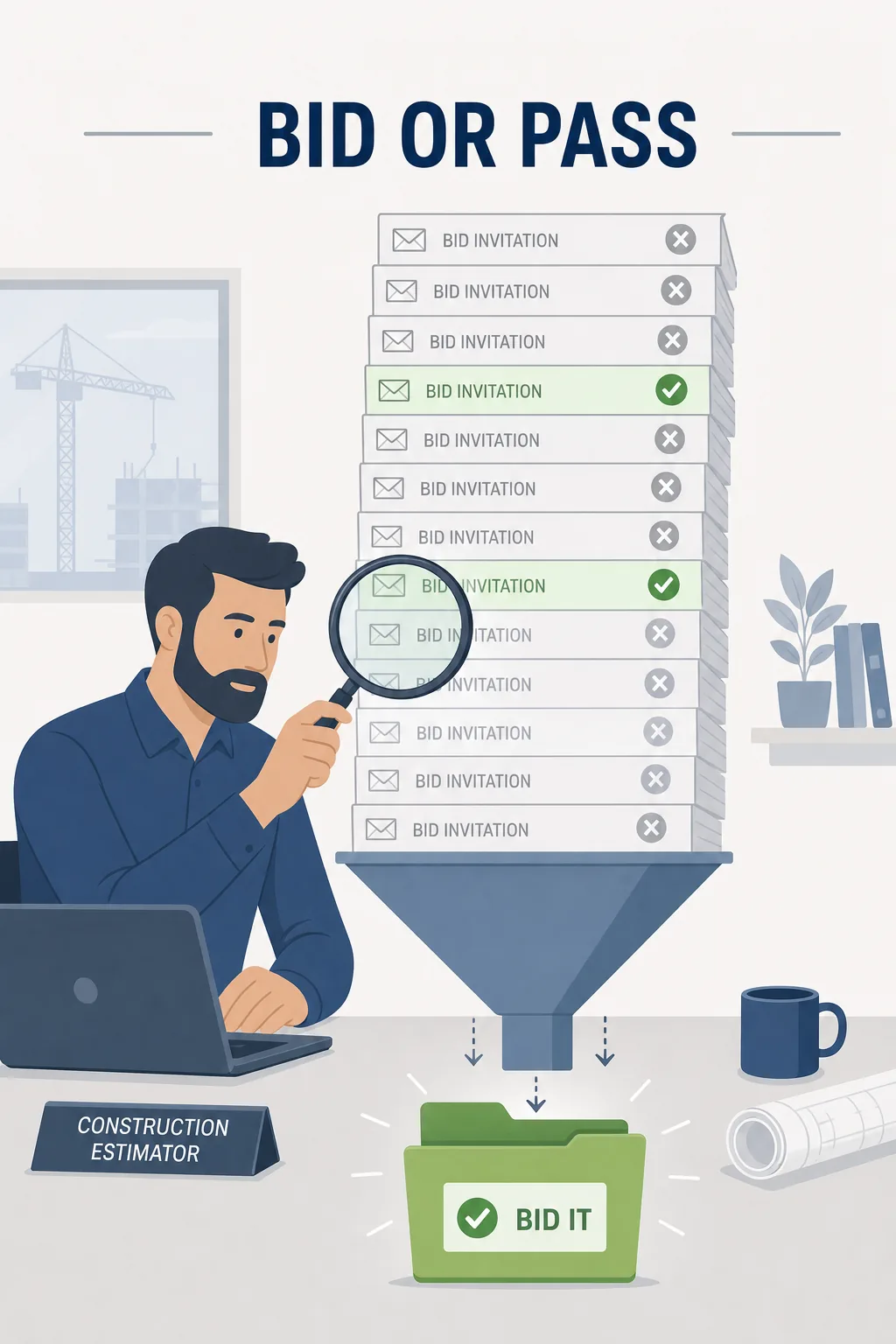
Finding qualified estimators can also improve bid selectivity. A good estimator sees risk early. They can tell the team which projects deserve attention, which scopes need clarification, and which bids may not be worth the time. That matters because not every opportunity is a good opportunity.
Contractors with lean teams may benefit from this guidance on how to bid more jobs with a small team.
When Outsourcing Is Better Than Finding a Full-Time Estimator
Finding qualified estimators for full-time roles can take time. Sometimes, too much time. If a contractor has steady bid volume, enough margin to support salary and benefits, and a clear internal review process, an in-house estimator may be the right answer. But when bid volume rises and falls, outsourcing may make more sense.
Outsourcing is often a better fit when a company has too many bids for its current staff, needs support for a specialized trade, wants to avoid hiring before revenue is predictable, or needs a backup during vacations, turnover, or peak bid seasons. It can also help when a company wants to expand into commercial work but does not yet have enough internal estimating experience.
Here’s the thing: outsourcing does not have to replace the internal team. It can support it. A contractor may keep final pricing and proposal control in-house while outsourcing takeoffs, marked plans, quantities, and scope review.
That model lets owners and PMs focus on sales, client relationships, supplier strategy, and operations instead of spending every evening measuring plans. For contractors under staffing pressure, estimating without enough staff directly addresses the challenge.
How to Compare Construction Estimating Companies Before You Hire One
Construction estimating companies are not all the same. Some provide basic quantity takeoffs. Some prepare full cost estimates. Some specialize in certain trades. Some return original software files, while others send only a spreadsheet or PDF. Before a contractor chooses a provider, the deliverables need to be clear.
A strong estimating partner should be able to explain its process, software, turnaround time, review method, addenda handling, and communication standards. It should also be clear about what is included and what is not included. If the contractor needs quantities only, say so. If the contractor needs marked plans, job notes, scope review, and proposal support, say that too.
Procore’s construction estimating guide explains the process from bid package review through takeoff, labor, materials, overhead, and profit. That matters because a reliable estimating partner should understand the full estimating chain, not just one measurement step.
For commercial work, ask whether the provider understands the trade. A generic estimate may not be enough for flooring, drywall, ceilings, or painting. The estimator should know what to look for in plans and specifications, and they should return work in a format the contractor can review.
QuantifyNA’s value sits in that practical space. The company supports contractors with trade-specific estimating, material quantities, marked plans, original software files, and workflow-aware deliverables. That makes the service useful for contractors that want more than a number; they want bid support they can use.
Contractors comparing options can also review how much an estimate costs before they decide whether to hire, outsource, or use a mixed model.
A Practical Scorecard for Finding Qualified Estimators
A scorecard keeps the hiring process honest. It also helps a contractor compare an in-house candidate, freelancer, and estimating company using the same basic criteria.
| Evaluation Area | Weak Fit | Strong Fit |
| Trade knowledge | Talks in general terms and cannot name common scope risks. | Shows experience with similar project types, materials, and bid conditions. |
| Takeoff quality | Sends numbers without marked plans or review notes. | Provides quantities, marked plans, assumptions, and clear file structure. |
| Software fit | Uses tools that do not match the contractor’s workflow. | Can work with preferred software or return usable exports and original files. |
| Communication | Replies late or gives vague answers. | Explains scope, exclusions, conflicts, and addenda clearly. |
| Deadline reliability | Has no process for revisions or late document changes. | Defines turnaround time and addenda review before work starts. |
| Business value | Competes on cheap pricing only. | Helps protect bid accuracy, margin, and project handoff. |
| Long-term fit | Works only as a one-off transaction. | Can support repeat bid volume and build process consistency. |
This table is especially useful because finding qualified estimators is not just a recruiting task. It is a risk management task.
Common Mistakes Contractors Make When Hiring Estimators
Many contractors hire estimators too fast because they are already behind. That pressure is understandable, but it can lead to poor decisions.
One common mistake is hiring by price. A low-cost estimator may look attractive until the work has to be redone, the project manager cannot understand the scope, or the bid misses a key condition. Cheap estimating is not cheap if it damages the bid.
Another mistake is skipping the test project. A résumé can say “construction estimator,” “cost estimator,” “job cost estimator,” or “project estimator,” but those titles do not prove competence. A test takeoff shows how the person thinks.
Some contractors also fail to define the role. They want one person to do takeoffs, price labor, manage vendors, write proposals, handle preconstruction, support PMs, and chase new bids. That may be possible for a senior estimator, but it should be stated clearly. Otherwise, the new hire starts in confusion.
Software compatibility is another common issue. If the estimator’s files cannot be reviewed or revised, the contractor loses control of the work. The best estimate is one the team can understand, audit, and use after award.
A final mistake is asking a generalist to handle specialty work without support. Flooring, drywall, ceilings, and painting all have details that generic estimators may miss. Those details can become expensive after the bid is won.
Contractors that want to reduce avoidable risk can review these common estimating errors that cost contractors.
FAQ: Finding Qualified Estimators
What is an estimator in construction?
An estimator in construction is a professional who reviews drawings, specifications, and project requirements to calculate expected costs for labor, materials, equipment, overhead, and related work. The estimator helps the contractor decide what a project may cost and what price should be submitted.
What does a construction estimator do?
A construction estimator performs takeoffs, reviews bid documents, builds cost estimates, checks labor and material needs, requests vendor quotes, prepares scope notes, and helps with bid review. On some teams, the estimator also supports project managers after award so the field team understands what was included.
How do I find a good construction estimator?
Finding qualified estimators usually takes a mix of referrals, trade networks, job boards, LinkedIn searches, test projects, reference checks, and careful review of sample work. Contractors should test for trade knowledge, software skills, communication, attention to detail, and the ability to explain assumptions.
What qualifications should a construction estimator have?
A construction estimator should understand drawings, specifications, materials, labor, cost estimating, software, and the construction process. A degree in construction management, engineering, or a related field can help, but field experience and trade-specific estimating skill often matter just as much.
Should I hire a full-time estimator or outsource estimating?
A full-time estimator may make sense when the contractor has steady bid volume and enough work to justify the cost. Outsourcing may work better when bid volume is uneven, deadlines are tight, staff is limited, or the company needs trade-specific estimating support without adding payroll.
What is the difference between a cost estimator and a project estimator?
A cost estimator may work in construction, manufacturing, engineering, or other industries. A project estimator is usually tied to a specific project and may work closely with project management, vendors, and operations. In construction, the terms often overlap.
What does a cost estimator do?
A cost estimator reviews data, project documents, labor needs, material costs, time requirements, and other cost factors to prepare an estimate. In construction, that often includes takeoffs, scope review, vendor pricing, and bid support.
How do I know if an estimating company is qualified?
A qualified estimating company should understand your trade, explain its process, use reliable software, return reviewable deliverables, communicate assumptions, handle addenda, and provide work that your team can use. For specialty contractors, trade experience should be a deciding factor.
Better Bids Start With the Right Estimating Support
Finding qualified estimators is not about filling a seat. It is about protecting the bid before the job ever reaches the field.
A contractor needs numbers that can be reviewed, defended, and handed off with confidence. That requires more than software. It requires trade knowledge, process discipline, strong analytical judgment, communication skills, and enough construction experience to know when something does not look right.
Some companies will solve that need with an in-house estimator. Others will use a freelancer for occasional support. Many contractors, especially small and mid-sized firms, may get better results from a specialized estimating partner that can help them bid more work without adding full-time overhead.
QuantifyNA was built for that problem. With trade-specific estimating support for flooring, drywall, ceilings, painting, and related commercial scopes, the company helps contractors turn complex documents into clear quantities, marked plans, and bid-ready information.
QuantifyNA’s approach is shaped by founder Kathy Case’s long background in commercial construction, project management, sales, and estimating. That field-aware perspective is what makes the company different from generic quantity takeoff providers.
If finding qualified estimators has become a bottleneck for your team, it may be time to stop chasing capacity project by project. Get estimating support that fits the way contractors actually work, and talk to QuantifyNA about estimating support.
This guide is written for commercial contractors, specialty subcontractors, owners, project managers, and lean preconstruction teams that need more bid capacity without gambling on bad numbers. It is especially useful for flooring, drywall, ceiling, and painting contractors that need accurate takeoffs, clear quantities, and reviewable estimating files before bid day.