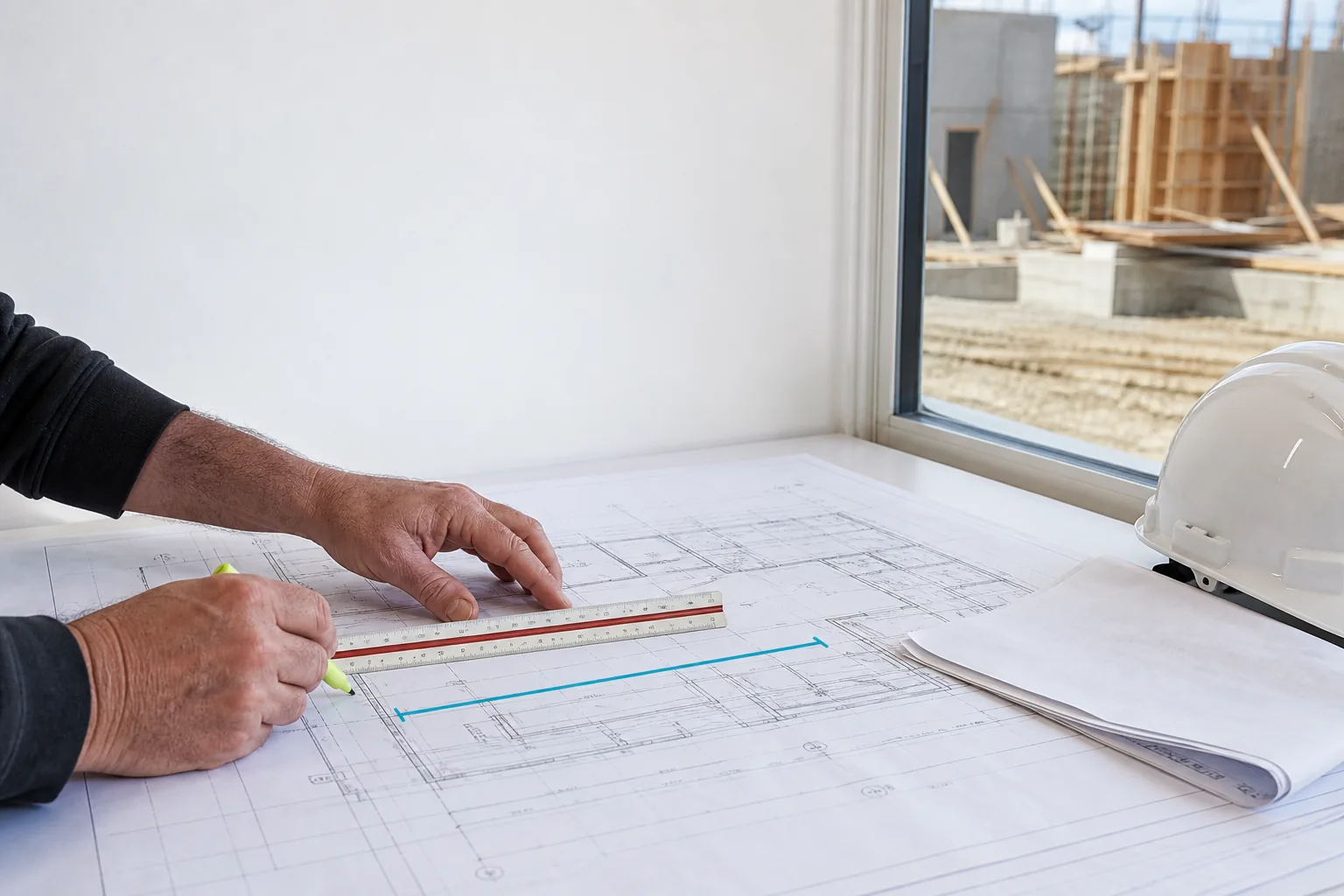
Most contractors don’t notice the problem right away. It builds slowly, misses deadlines, rushes numbers, and jobs that don’t quite go as planned. Estimating starts to feel like a constant pressure point. That’s usually when outsourcing painting estimating benefits begin to make sense. This article breaks down where outsourcing fits in, what changes when you use it, and why many contractors rely on it once the workload starts getting uneven.
Outsourcing Painting Estimating Benefits
Outsourcing painting estimating benefits aren’t about replacing your team. It’s more about taking one critical piece off their plate so everything else runs smoother.
Estimating has a way of piling up. One set of drawings turns into three. Addenda come in late. Someone needs numbers by tomorrow morning. And suddenly, accuracy becomes secondary to speed.
That’s where outsourcing construction estimating starts to fit. Instead of pushing internal teams to keep up with every bid, contractors pass the estimating work to specialists who deal with takeoffs every day. It doesn’t remove control, it just spreads the workload in a way that’s easier to manage.
Why Painting Contractors Struggle with In-House Estimating
There’s nothing wrong with keeping estimating in-house until volume increases. At first, it works fine. A project manager handles numbers here and there. Maybe someone on the team picks up estimating as part of their role. But once work starts coming in faster, things shift.
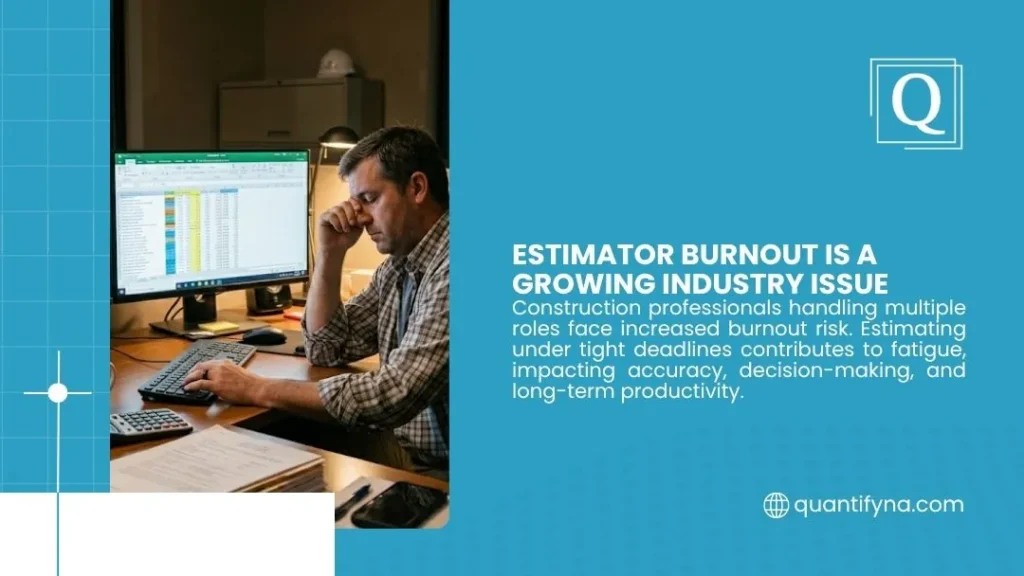
Deadlines overlap. Drawings stack up. And estimating ends up squeezed into whatever time is left. Hiring a full-time estimator seems like the next step, but that comes with its own set of trade-offs. It’s not just salary, it’s training, software, and keeping that role productive even during slower months.
That’s why contractors dealing with estimating without enough staff often hit a ceiling. Not because they lack skill, but because time runs out.
Key Outsourcing Painting Estimating Benefits That Impact Profitability
Faster Turnaround Time on Bids
If there’s one thing that consistently costs contractors opportunities, it’s timing. A solid estimate submitted late rarely gets considered. On the other hand, a well-prepared bid delivered on time, or early, tends to stand out.
Outsourced estimators aren’t splitting attention between jobsite issues and office work. Their focus stays on drawings, quantities, and scope. That alone noticeably shortens turnaround time.
Contractors who’ve worked on improving how to bid painting jobs faster usually realize that speed doesn’t come from working longer hours; it comes from removing bottlenecks.
Improved Accuracy and Reduced Estimating Errors
Accuracy doesn’t fail all at once. It slips. A missed section here, a miscalculated area there. At first, it looks manageable. Later, it shows up as a budget strain or extra labor that wasn’t planned.
Professional estimators follow repeatable systems. They don’t rely on memory or rushed calculations at the end of the day. Instead, they break down drawings methodically, often using specialized tools that reduce manual errors.
Studies point out that inefficiencies in construction, many tied to planning and estimating, can reduce productivity by a significant margin. Contractors who’ve dealt with estimating errors in construction don’t need much convincing on that point.
Significant Cost Savings Compared to Full-Time Estimators
It’s easy to assume outsourcing adds cost. On paper, it might look that way at first glance. But when you factor in everything tied to an in-house role, the numbers shift.
Cost Comparison Between In-House and Outsourced Estimating
| Cost Factor | In-House Estimator | Outsourced Estimating |
| Salary | Ongoing expense | Project-based |
| Software | Separate licenses | Typically included |
| Training | Required | Not needed |
| Workload Balance | Fixed capacity | Flexible |
Looking at actual spending, like construction estimating services costs, often reveals that outsourcing reduces long-term financial pressure, especially for contractors who don’t need estimating support every single day.
Access to Professional Estimators with Trade Expertise
Painting isn’t just about coverage rates. There are surface conditions, finishes, prep work, and material variations that all affect the final numbers. Estimators who focus on painting projects regularly develop a different level of familiarity with those details.
They’ve seen how certain assumptions play out in real projects and where they tend to fail. That kind of experience doesn’t show up in spreadsheets, but it affects outcomes.
Ability to Scale Without Hiring
Workload in construction rarely stays consistent. Some months are steady, others feel like everything lands at once. Hiring ahead of that demand is risky. Waiting until it hits can leave teams stretched thin.
Outsourcing creates a middle ground. You can handle more bids when things pick up, then scale back without carrying extra overhead. Contractors thinking about growth often revisit how to scale a subcontracting business, and estimating capacity is usually part of that conversation.
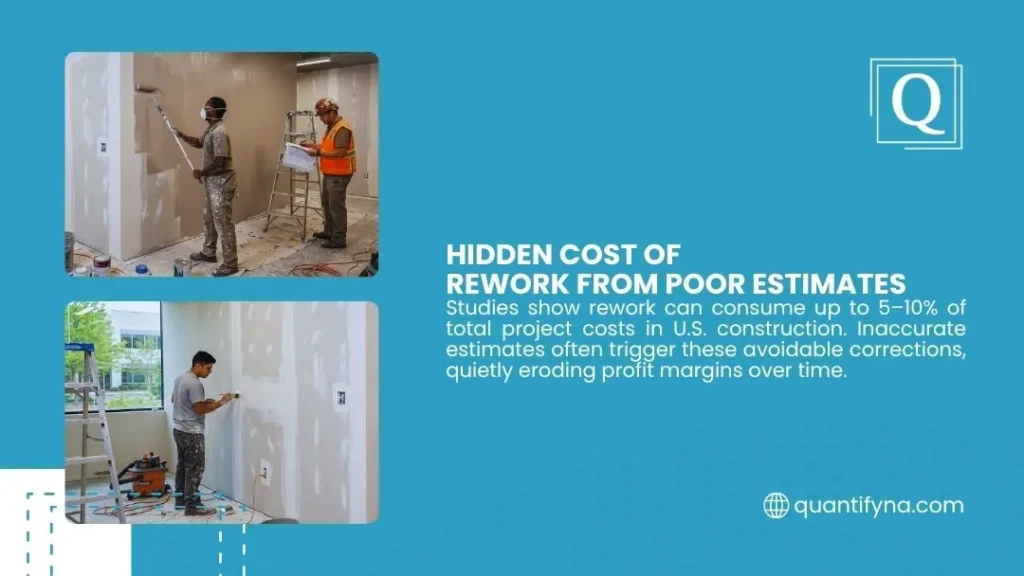
Higher Bid Win Rate Through Better Documentation
Clients don’t just look at the bottom number; they look at how that number is presented. Clear, structured estimates make it easier to understand the scope. They reduce questions. They build confidence.
Outsourced estimates tend to follow consistent formats, with organized breakdowns that support decision-making. Contractors tracking improvements in their construction bid win rate often notice that better documentation plays a role alongside pricing.
How Outsourcing Painting Estimating Improves Project Management
Project management rarely breaks down because of execution; it usually starts earlier, during estimating. When the numbers aren’t right, everything that follows needs adjusting.
Outsourcing helps stabilize that starting point. Instead of guessing or rushing through takeoffs, contractors begin with clearer quantities and better-defined scopes. That changes how projects are planned from day one.
You can see the difference more clearly when comparing how projects behave with and without structured estimating support.
Impact of Outsourced Estimating on Project Management
| Project Area | Without Outsourcing | With Outsourcing |
| Material Planning | Often reactive | Planned in advance |
| Labor Scheduling | Adjusted mid-project | Aligned from start |
| Budget Control | Frequent overruns | More predictable costs |
| Change Orders | Higher frequency | Reduced occurrences |
| Timeline Stability | Delays more common | Improved consistency |
When estimates are built carefully, project managers don’t spend time correcting earlier assumptions. They focus on execution instead. That shift may not look dramatic at first, but over multiple projects, it reduces friction across the board.
In-House vs Outsourced Estimating: What’s the Real Difference?
| Feature | In-House Estimating | Outsourced Estimating |
| Flexibility | Limited to team size | Adjusts with demand |
| Accuracy | Varies under pressure | More consistent |
| Speed | Slows during busy periods | Steady turnaround |
| Cost | Fixed overhead | Variable |
Neither approach is inherently wrong. The difference shows up when the workload changes.
Real ROI of Outsourcing Painting Estimating
Return on investment in estimating isn’t always obvious right away. It doesn’t show up as a single number; it shows up across several areas over time.
The first change most contractors notice is volume. With estimating handled externally, more bids go out. That alone increases the chances of landing work.
Then comes accuracy. Fewer missed items mean fewer surprises once the project starts. Costs stay closer to what was planned, which protects margins.
According to a study, improving estimating accuracy can increase project profitability by several percentage points. That might not sound significant, but across multiple jobs, it adds up quickly.
There’s also a less visible benefit, decision-making. When estimates are reliable, contractors can price jobs with more confidence. That reduces hesitation during bidding and helps maintain consistency across proposals. When contractors explore the ROI of outsourcing estimating, the value often becomes clearer after a few cycles of use.
Looking at it practically, ROI from outsourcing painting estimating benefits comes from three places working together: more bids, better numbers, and fewer corrections after the job begins.
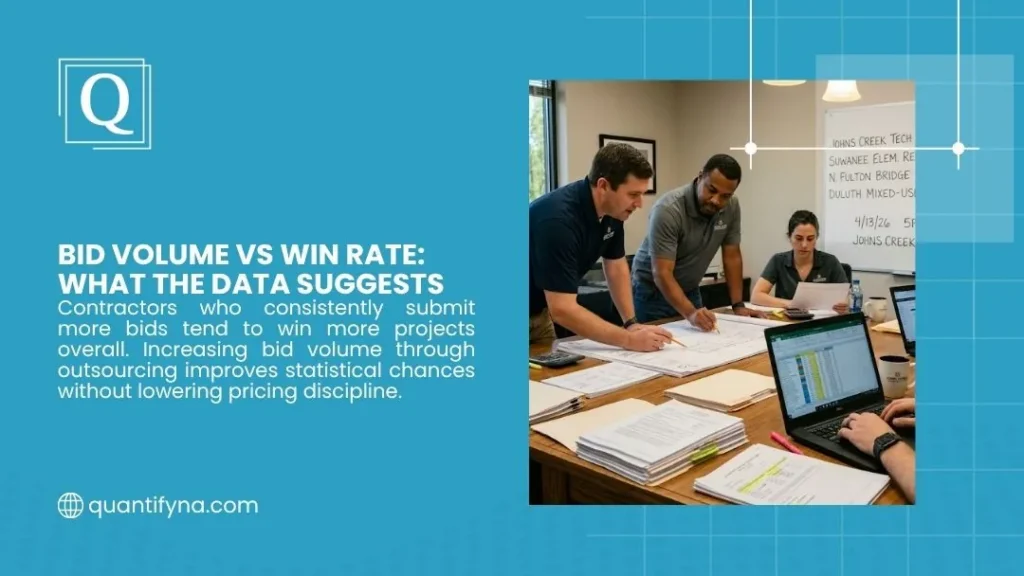
When Should You Outsource Painting Estimating?
Most contractors don’t decide to outsource all at once. It usually starts when the estimating begins to slow things down. You might notice bids going out later than planned. Or maybe opportunities are skipped because there simply isn’t enough time to prepare everything properly.
Another common point is growth. As companies start taking on larger or more frequent projects, estimating demand increases faster than internal capacity. That’s where outsourcing begins to make sense, not as a replacement, but as support.
Seasonal fluctuations also play a role. Some months bring a steady flow of work, while others come with sudden spikes. Keeping a full-time estimator for those peaks isn’t always practical.
There’s also the complexity factor. Large commercial painting jobs often require detailed breakdowns that take time to prepare correctly. In those cases, outsourcing helps maintain quality without slowing down other operations.
In simple terms, outsourcing becomes relevant when the cost of estimating starts limiting how many opportunities you can pursue.
How Outsourcing Painting Estimating Works
The process itself is more straightforward than many expect. It doesn’t add layers; it removes pressure. It starts with sending project drawings, specifications, and any relevant details. From there, the estimator reviews the scope and identifies what needs to be included.
Takeoffs are then completed using specialized tools, breaking down quantities by area, material, and finish. Instead of rough calculations, the output reflects actual project conditions.
Once complete, the estimate is delivered with organized documentation. This may include quantity breakdowns, notes on scope, and supporting details that help with bid preparation.
Communication continues throughout. If something in the drawings isn’t clear, it gets addressed before the estimate is finalized. That step alone prevents many of the issues contractors run into later.
For contractors, the process feels less like outsourcing and more like extending their team with focused support
Choosing the Right Painting Estimating Partner
Not every estimating service operates the same way, and the differences tend to show over time rather than immediately.
Experience in the trade matters. Painting has its own variables, surface preparation, coatings, finishes, and those details affect quantities. A partner who understands those nuances will produce more reliable estimates.
Turnaround time is another factor. Speed matters, but not at the cost of accuracy. The goal is consistent delivery, not rushed numbers.
Communication plays a larger role than most expect. Estimating isn’t just about numbers; it involves interpreting drawings and clarifying scope. A partner who asks the right questions early helps avoid confusion later.
Compatibility with your workflow also matters. Estimates should fit into your existing process without requiring additional adjustments.
Working with a provider like Quantify North America often comes down to this balance: experience, communication, and consistency over time.
Common Mistakes Contractors Make When Outsourcing Estimating
Outsourcing can solve a lot of problems, but only if it’s approached the right way. Certain mistakes tend to show up repeatedly, especially during the first few projects. Before going further, it helps to look at where things usually go wrong.
Common Outsourcing Mistakes and Their Impact
| Mistake | What Happens |
| Choosing based on the lowest price | Missing scope details and inaccurate quantities |
| Unclear project scope | Estimates lack completeness |
| Poor communication | Misalignment between the estimate and expectations |
| Ignoring software compatibility | Extra work integrating results |
| No review process | Errors go unnoticed until later stages |
These issues don’t usually appear immediately. They show up during execution, when adjustments become necessary. Avoiding them comes down to clarity, clear scope, clear expectations, and consistent communication. When those pieces are in place, outsourcing becomes far more effective.
FAQs
How does outsourcing affect estimate quality?
Quality often improves because estimators focus solely on takeoffs and follow structured processes instead of rushing through multiple responsibilities.
Is outsourcing only useful for large contractors?
No. Smaller contractors often benefit more because they gain access to expertise without maintaining a full-time estimating role.
Can outsourcing help reduce missed deadlines?
Yes. Dedicated estimating support ensures bids are completed on time, even during busy periods.
How do outsourced estimators handle complex projects?
They rely on experience, detailed plan analysis, and specialized software to break down complex scopes into manageable quantities.
Does outsourcing replace in-house estimators?
Not necessarily. Many contractors use it alongside internal teams to handle overflow or specialized projects.
What should contractors look for in an estimating partner?
Experience in the trade, consistent communication, reliable turnaround, and compatibility with existing workflows.
How quickly can outsourcing start making a difference?
In many cases, contractors notice improvements in workload balance and turnaround time within the first few projects.
Why This Matters for Contractors Moving Forward
Construction hasn’t slowed down, but resources haven’t kept pace either. Contractors are being asked to do more with tighter timelines and fewer people. Estimating sits right in the middle of that pressure.
Outsourcing painting estimating benefits offer a way to manage that pressure without overextending your team. It doesn’t change how you build, it changes how you prepare.If you’re looking for a more consistent way to handle estimating without adding overhead, contact us. We provide you with a practical place to start.