If you’ve ever lost a commercial painting bid by a hair or worse, won one and regretted it, you already know why learning how to estimate large commercial painting jobs matters. This guide breaks down the real-world process professional painting contractors use to price large-scale work with accuracy, control risk, and protect margins. No fluff. No guesswork. Just methods that hold up under pressure.
How to Estimate Large Commercial Painting Jobs the Right Way
At scale, painting estimating stops being math and starts becoming analysis. Large commercial painting jobs involve varied substrates, access constraints, multiple coats, staging, and strict schedules. Estimating them requires a methodical approach that accounts for production rates, risk exposure, and overhead recovery.
The first step in how to estimate large commercial painting jobs is understanding the total surface area. This means walls, ceilings, soffits, columns, stairwells, mechanical rooms, and exterior elevations. Total square footage alone won’t cut it. Surface condition, texture, and height directly affect productivity.
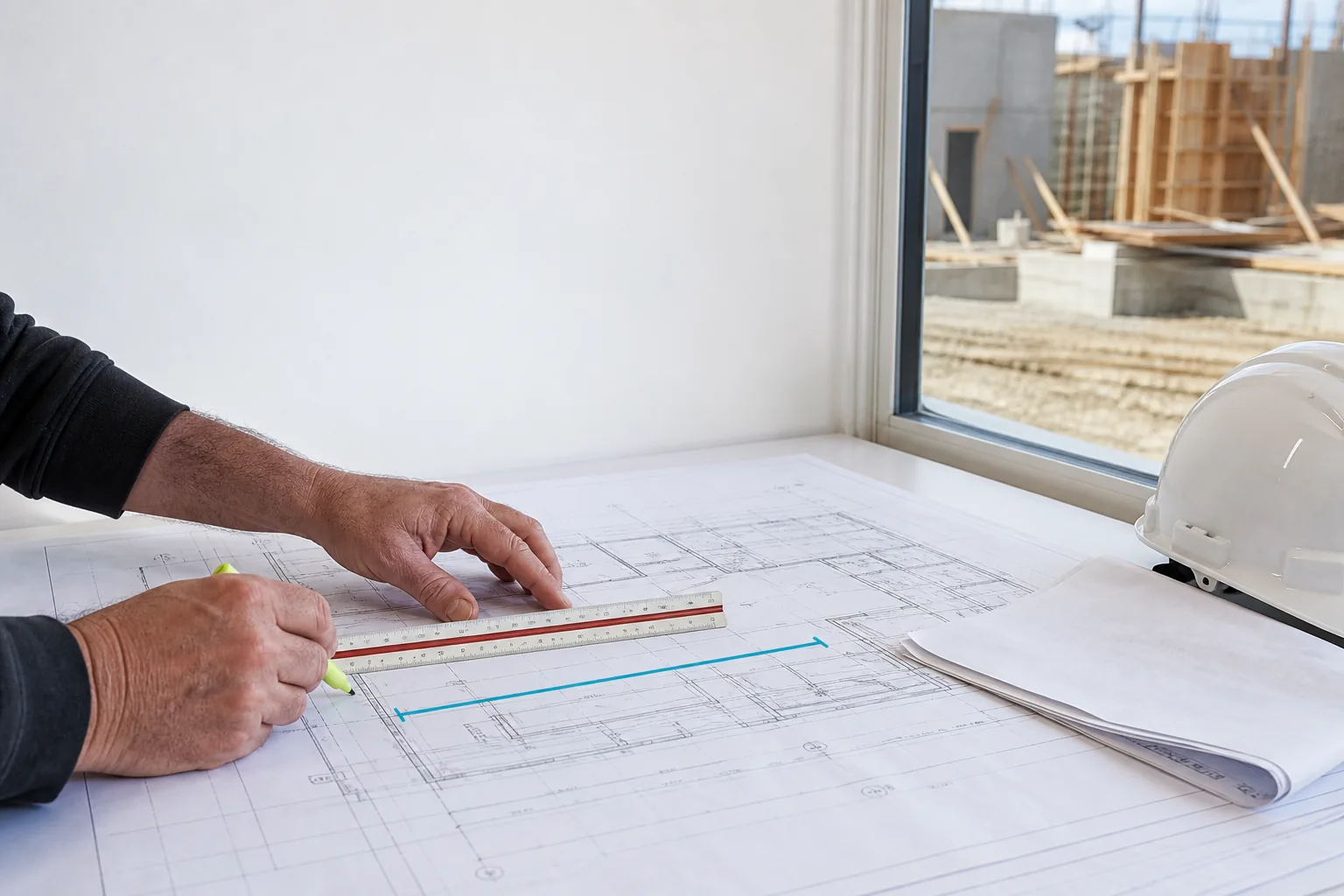
Professional painters avoid shortcuts here. They rely on digital takeoffs, site visits, and scaled drawings. This mirrors best practices used in broader construction estimating workflows, especially when accuracy matters more than speed.
Measuring Surface Area Without Guesswork
Large commercial spaces rarely behave like clean rectangles. Warehouses, hospitals, schools, and offices introduce angles, penetrations, and height variations that change labor output.
This is where estimating a paint job by square feet becomes nuanced. Instead of flat averages, professional estimators break surfaces into zones and apply adjusted rates. Smooth drywall paints faster than masonry. High ceilings slow crews. Prep work multiplies labor hours.
A painting calculator can help with early-stage budgeting, but final estimates depend on takeoff precision. Many contractors now combine paint estimating with digital construction takeoff tools to reduce omissions. This approach mirrors how disciplined teams handle materials estimating across trades.
Labor Cost Is the Make-or-Break Variable
If you misjudge labor, everything else collapses. The labor cost to paint interior walls varies widely by region, crew skill, and access conditions. According to the U.S. Bureau of Labor Statistics, the median hourly wage for painters in the U.S. exceeds $23.40 per hour before burden, benefits, and overhead.
For large commercial painting jobs, estimating labor means calculating crew size, daily output, and total duration. Productivity rates often range from 150 to 300 square feet per hour per painter, depending on prep, coating type, and height. Night shifts and phased work reduce efficiency further.
This is why experienced contractors estimate labor costs separately from materials. Painting labor drives profit margin more than paint costs ever will.
Paint Costs: Simple on Paper, Tricky in Reality
Paint costs look straightforward until they aren’t. A gallon of paint covers roughly 350 square feet on smooth surfaces, but porous substrates absorb more. Multiple coats double labor and materials. Specialty coatings change everything.
Commercial painting estimates factor in types of paint, manufacturer coverage data, waste allowance, and touch-up reserves. Estimators who skip this step often underprice projects and absorb the loss later. Professional painting contractors also account for price volatility. Bulk purchasing helps, but only if quantities are accurate. This is why disciplined painting estimating workflows mirror those used in structured construction estimating services.

Sample Rate Analysis for Commercial Painting Works
| Cost Component | Typical Range | Notes |
| Labor | 55–65% | Driven by prep work and access |
| Materials | 20–30% | Varies by coating system |
| Equipment | 5–10% | Lifts, scaffolding, containment |
| Overhead & Profit | 10–20% | Depends on risk and schedule |
This breakdown reflects how experienced painting companies approach how to estimate large commercial painting jobs without compressing margins.
Pricing Strategy: How Professionals Protect Profit on Large Commercial Painting Jobs
Pricing large commercial painting work is less about winning the lowest number and more about controlling exposure. On high-volume projects, even small miscalculations compound quickly. Experienced painting contractors build pricing models that absorb uncertainty without inflating bids beyond market tolerance.
Professional estimators separate direct costs from recoverable overhead early in the process. Supervision time, mobilization, equipment staging, safety compliance, and administrative support all belong in the price, even if they don’t appear on drawings. These costs are rarely optional in commercial environments, yet they are often underrepresented in rushed bids.
Margin planning also changes at scale. Instead of applying a flat markup, seasoned firms adjust profit expectations based on risk density. Projects with tight schedules, phased access, or occupied spaces demand higher contingency allowances. Stable scopes with repetitive layouts may justify leaner margins due to predictable production.
This disciplined approach to pricing aligns closely with structured estimating methods used across commercial construction, where cost certainty matters as much as competitiveness.
Common Estimating Errors That Kill Commercial Bids
| Mistake | Impact |
| Ignoring surface prep | Underestimated labor |
| Flat square-foot pricing | Lost margin |
| No site visit | Missed access constraints |
| Unrealistic crew output | Schedule overruns |
Avoiding these mistakes is central to mastering how to estimate large commercial painting jobs consistently.
Bidding Strategy for Commercial Painting Jobs
Successful commercial painting bids balance clarity with restraint. Overpromising invites disputes. Underexplaining raises red flags. Winning proposals communicate scope boundaries, assumptions, and exclusions in plain language that project teams can act on.
Seasoned contractors study bid environments before submitting numbers. Understanding how general contractors evaluate painting bids, whether price-driven, schedule-driven, or relationship-driven, guides how estimates are framed. A well-supported number often carries more weight than the lowest one.
Timing matters too. Bids submitted early allow for clarification and revisions, while last-minute submissions reduce flexibility. Many firms also maintain standardized estimating checklists to ensure no scope element slips through under deadline pressure.
At this level, bidding becomes less transactional and more strategic. Each submission reinforces credibility, which improves long-term win rates beyond any single job.

Technology, Tools, and Estimating Discipline
Technology has changed how commercial painting estimates are built, but it hasn’t replaced judgment. Digital takeoff platforms, historical cost databases, and estimating software accelerate workflows, yet accuracy still depends on how data is interpreted.
Professional estimators rely on layered reviews rather than single-pass calculations. Initial quantities are cross-checked against production assumptions, then reconciled with schedule constraints. This review process mirrors the estimating discipline used in broader construction cost control systems.
Technology also improves collaboration. Shared takeoff files, annotated drawings, and version-controlled revisions reduce miscommunication between estimators, project managers, and field supervisors. When estimates align with execution realities, fewer adjustments occur after award.
Used correctly, tools support consistency. Used carelessly, they magnify errors. Discipline, not software, remains the differentiator.
Residential vs Commercial Painting Estimating
| Factor | Residential | Commercial |
| Surface complexity | Low | High |
| Crew size | Small | Large |
| Pricing method | Per room | Production-based |
| Risk exposure | Limited | Significant |
This comparison explains why residential logic fails when applied to how to estimate large commercial painting jobs.
Why Accuracy Beats Speed Every Time in Commercial Painting Estimates
Speed feels productive, especially during peak bidding seasons. But in commercial painting, rushed estimates often cost more than they save. Errors rarely surface immediately. They appear mid-project, when corrections are expensive, and leverage disappears.
Accurate estimating allows contractors to plan labor realistically, sequence work efficiently, and allocate resources without constant firefighting. It also builds trust with general contractors who value predictability over surprises.
Firms that prioritize accuracy tend to experience fewer change disputes, steadier cash flow, and stronger repeat business. Over time, this reliability becomes a competitive advantage that outlasts any single low bid. Accuracy does not mean slow. It means deliberate. And that difference shows up on the balance sheet.
The Practical Path Forward for Painting Contractors
For many contractors, the challenge is not understanding how to estimate large commercial painting jobs, but finding the time and staffing to do it consistently. Estimating workloads fluctuates. Deadlines compress. Experienced estimators are hard to retain.
This is why many commercial contractors now supplement internal teams with specialized estimating partners during high-volume periods. Outsourcing detailed takeoffs and pricing support allows internal staff to focus on operations, project delivery, and client relationships without sacrificing bid quality.
When estimating becomes scalable instead of reactive, growth follows naturally and sustainably.

Final Thoughts
Estimating large commercial painting jobs is not a guessing game. It is a structured process built on measurement, labor realism, risk awareness, and documentation discipline. Contractors who treat estimating as a core business function, not a rushed prelude, position themselves to win better projects and protect profit.
If your team needs support producing reliable commercial painting estimates without adding permanent overhead, Quantify North America provides specialized estimating services designed for commercial contractors who value accuracy, speed, and clarity. Their experience across painting, drywall, and flooring scopes allows estimates to integrate cleanly into broader construction bids.
Explore how professional estimating support can strengthen your next bid by visiting Quantify North America’s painting estimating resources. The difference shows up before the job starts, and long after it finishes.