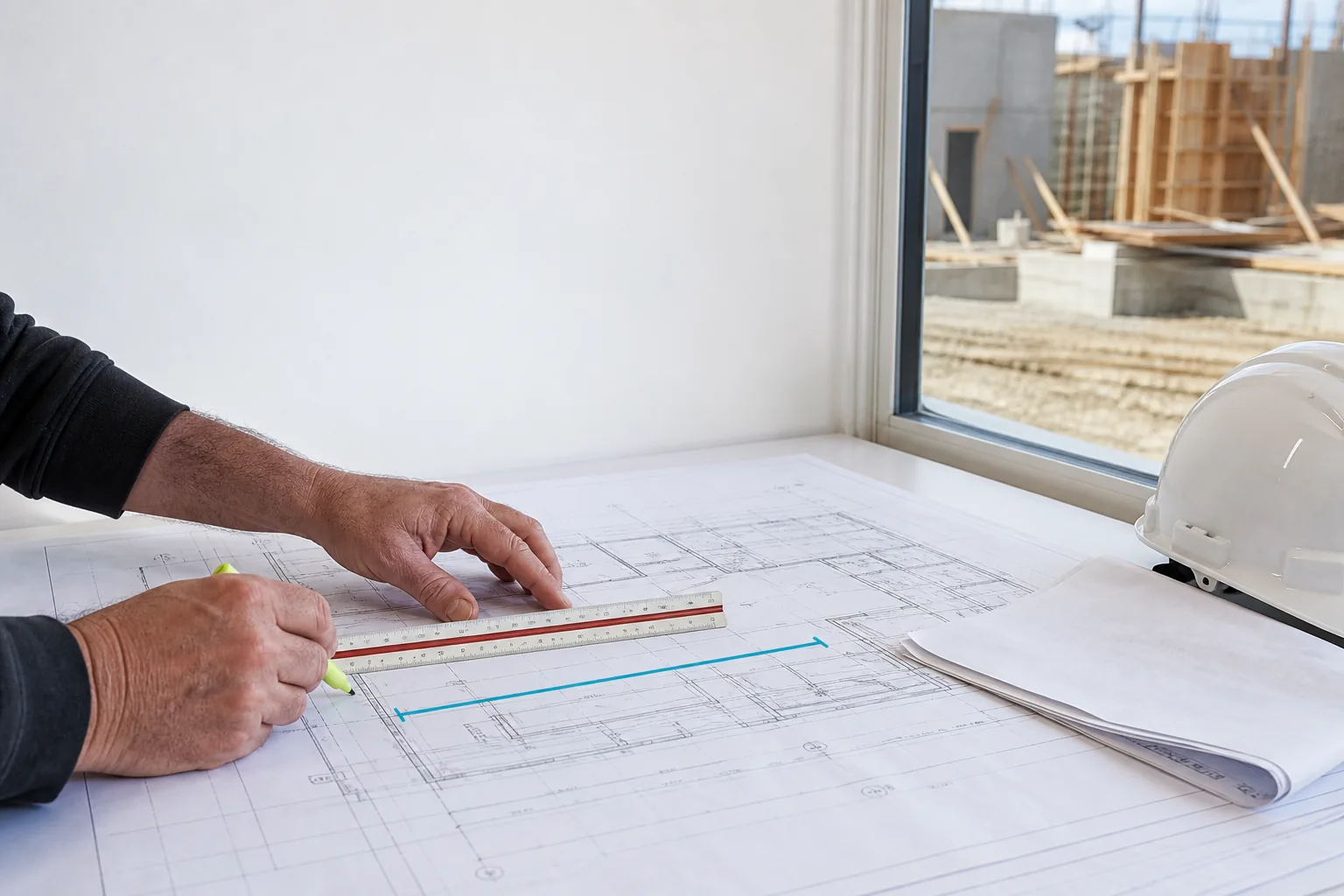
Learning how to bid painting jobs faster has become a survival skill for painting contractors. Tight deadlines, rising material costs, and aggressive competition leave little room for slow estimates or sloppy numbers.
This guide breaks down exactly how to bid painting jobs faster without gambling on your profit margin, whether you handle residential work, commercial paint jobs, or both.
Speed improves when contractors stop chasing every painting job and focus on bid sources that convert. Our guide to choosing which jobs are worth bidding explains how to filter incoming invitations before they consume estimating hours you cannot recover.
How to Bid Painting Jobs Faster Without Guesswork
How to bid painting jobs faster starts with removing guesswork from the equation. Many painting bids slow down because contractors rely on memory, rough measurements, or outdated pricing. That approach worked a decade ago. It fails now.
Fast painting bids depend on repeatable math. Square footage, labor productivity, and paint coverage rates should already live in your system before a bid request lands in your inbox. When those numbers stay current, bidding paint jobs turns from a scramble into a routine task.
Most construction estimates take several business days, depending on project complexity. Simple jobs can take a few hours, but typical estimates, as outlined in Project Management for Construction, often span 3–10 business days from start to finish. Cutting that time in half allows more bids per week, which directly impacts revenue.
Why Most Painting Contractors Lose Time on Painting Bids
Most painting contractors lose time on painting bids because of the following problem: most delays don’t come from measuring walls. They come from decision-making.
Painting contractors lose time when:
- They recalculate labor costs for every job.
- They price paint without accounting for waste.
- They estimate overhead costs after the fact.
A painting estimate becomes slow when every bid feels custom. Fast contractors standardize what can be standardized and only adjust what truly changes.
Research on why does rework occur in construction highlights the significant cost impact that rework and estimation errors can have on construction projects, underscoring how crucial accurate estimating is to profitability and performance. Speed without structure leads to losses. Structure creates speed.
How to Bid a Painting Job Using Square Foot Data
Square footage remains the backbone of fast painting bids. Knowing how to bid paint jobs by square foot allows you to produce a painting bid in minutes instead of hours.
Here’s what works: wall area, ceiling area, trim linear footage, and surface prep categories get separated early. Each category has its own labor rate and gallon of paint coverage assumption.
The industry paint estimator, widely used across the industry, estimates roughly 250–400 square feet per gallon of paint under ideal conditions. Real-world jobs rarely hit that number. Fast bidders already adjust for texture, color changes, and multiple coats.
Typical Square Foot Benchmarks
| Surface Type | Avg Sq Ft per Hour | Notes |
| Interior Walls | 150–200 | Includes cut-in time |
| Ceilings | 100–150 | Height dependent |
| Exterior Siding | 80–120 | Prep-heavy |
| Trim | Linear-based | High labor cost |
Square foot data doesn’t replace judgment. It removes hesitation.
Interior vs Exterior Painting Bids: What Changes
Interior and exterior painting bids move at different speeds because the risks, production rates, and unknowns don’t line up the same way. Interior work rewards consistency, while exterior work demands caution.
| Factor | Interior Painting Bids | Exterior Painting Bids |
| Surface Access | Controlled and predictable | Weather- and height-dependent |
| Prep Complexity | Moderate and repeatable | Often heavy and uncertain |
| Labor Productivity | Faster, stable hourly output | Slower, variable output |
| Material Waste | Lower and easier to forecast | Higher due to exposure |
| Risk Level | Low to moderate | Moderate to high |
Understanding these differences allows contractors to adjust labor assumptions, material allowances, and contingency buffers before the estimate starts. That adjustment alone trims revision cycles and keeps painting bids moving instead of stalling mid-review.

Commercial Painting Bids and Why Speed Matters More
How to bid commercial painting jobs faster isn’t optional. It’s expected. Commercial painting bids often come with compressed timelines, large square footage, and multi-document plan sets. General contractors rarely wait. They move on.
Commercial painting contractors who rely on internal staff alone struggle during peak bid seasons. That’s where professional painting estimating support becomes critical. Using external construction estimating services allows contractors to submit accurate commercial painting bids without burning internal resources.
Quantify North America’s dedicated painting estimating services support commercial contractors facing exactly this challenge. Their process integrates directly with contractor workflows and eliminates manual takeoffs that slow bidding cycles.
Material Costs, Labor Costs, and Profit Margin Math
Fast painting bids fail when profit margin math stays fuzzy. Material costs fluctuate. Labor costs climb. Overhead costs don’t disappear just because a bid feels urgent.
According to research, labor costs now represent over 40% of total painting job costs on commercial projects. Ignoring that reality compresses margins fast.
Painting Cost Breakdown (Typical)
| Cost Category | Percentage Range |
| Labor Costs | 35–50% |
| Material Costs | 20–30% |
| Overhead Costs | 10–20% |
| Profit Margin | 10–15% |
Fast bidders lock these ranges into templates. When a painting estimate starts, the math runs automatically.
How to Quote Painting Jobs Accurately Under Tight Deadlines
How to quote painting jobs faster without mistakes requires one mindset shift: speed comes from preparation, not shortcuts. Painting contractors who quote fast rely on historical data. They track production rates. They document past painting job bids. They review which jobs hit target margins and which didn’t. If estimating eats your week, outsourcing construction estimating becomes less of a cost and more of a revenue strategy. The ROI of outsourcing estimating explains why many contractors shift this work externally during high-volume periods.

Where to Bid on Painting Jobs That Convert
Speed improves when contractors stop chasing every painting job and focus on bid sources that convert. Public bid boards generate volume, but they also invite heavy competition and thin margins. Private bid invitations, negotiated commercial work, and repeat-client opportunities usually deliver higher-quality painting job bids with fewer surprises.
Commercial painting contractors often find better results through general contractor invite lists, construction management firms, and developer networks where scope clarity is stronger. These channels reduce time spent decoding vague plans and eliminate constant rebidding. Subscribing to regional construction platforms can help surface commercial paint jobs early, which gives estimators more breathing room before deadlines compress.
The fastest bidders also maintain direct relationships. When a contractor already understands a client’s standards, approval process, and pricing expectations, the painting bid moves quickly because fewer assumptions need validation. Conversion improves not because the bid is cheaper, but because it arrives complete, clear, and on time.
Tools, Estimating Software, and When Outsourcing Works
Estimating tools shorten the measuring phase, but speed only materializes when software output matches real-world production rates. Digital takeoffs reduce manual work, yet pricing logic still relies on experience and current cost data. Contractors who struggle to bid painting jobs faster often own the tools but lack the time to maintain clean estimating systems.
Outsourcing enters the picture when internal teams reach capacity. Instead of delaying bids or rushing numbers, contractors hand off takeoffs while retaining pricing control. This approach protects accuracy during peak seasons and keeps bid volume steady.
| Tool or Service Type | Primary Function | Speed Impact |
| Digital Takeoff Software | Measures square footage quickly | Reduces manual effort |
| Cost Databases | Updates labor and material rates | Prevents recalculation |
| Estimating Templates | Standardizes pricing logic | Cuts decision time |
| Outsourced Estimating | Handles volume overflow | Preserves turnaround time |
Professional estimating partners like Quantify North America support painting contractors by delivering structured takeoffs that plug directly into existing workflows. Their trade-specific approach removes bottlenecks without adding long-term overhead, which is why outsourcing often shifts from a temporary fix to a permanent advantage.
What Fast Painting Contractors Do Differently
Fast painting contractors treat estimating as a system, not a reaction. They don’t wait for bid requests to organize pricing or confirm production rates. Those numbers already exist, are reviewed regularly, and adjusted based on completed jobs. When a new painting job arrives, the estimator works from a framework rather than a blank page.
They also review lost bids as closely as won ones. Patterns emerge quickly. Certain job types consistently underperform, while others hit margins reliably. That insight shapes future bids and eliminates hesitation. Over time, estimating becomes less about guessing and more about confirming.
Most importantly, fast contractors protect focus. They limit interruptions, reduce internal handoffs, and avoid last-minute scrambles. Speed becomes predictable because the process stays calm, even when deadlines don’t.
Why Faster Painting Bids Win More Work
Faster painting bids win because they arrive while decisions remain open. Contractors who submit early gain more time for clarification, value-engineering discussions, and trust-building with clients. Speed signals competence, but only when accuracy holds.
The contractors who grow steadily don’t bid on everything. They bid efficiently. They know which jobs fit their crews, which clients respect scope clarity, and which timelines remain realistic. Faster bidding supports selectivity instead of replacing it. If estimating pressure limits your capacity or slows growth, professional support can help stabilize the process. Quantify North America specializes in painting estimating that prioritizes accuracy, transparency, and turnaround time. Contractors who want to bid more jobs without stretching internal teams can explore their estimating services directly and see how structured support improves both speed and confidence.