Outsourcing drywall estimating costs can vary widely depending on project size, complexity, and turnaround expectations. This guide explains real pricing models, compares in-house versus outsourced estimating, and shows how contractors improve bid accuracy and profitability without expanding their team.
Outsourcing Drywall Estimating Costs for Contractors
Outsourcing drywall estimating costs has become a central concern for contractors trying to stay competitive in today’s fast-moving construction market. Bids move quickly, drawings change often, and estimating teams rarely have enough time to keep up. That’s where outsourced drywall estimating services step in.
Here’s what usually happens on the ground. A contractor receives a set of drawings for a commercial drywall project. The scope includes gypsum board layouts, framing details, joint compound, screws, and corner beads. The deadline is tight. Internal staff either rush the takeoff or delay submission. Both options cost money.
Outsourcing drywall estimating costs is essentially the fees paid to a third-party estimating partner who handles quantity takeoffs, costing of materials and labor, and detailed scope analysis. In return, contractors get accurate drywall quantities, faster turnaround time, and often a better chance at winning bids.
And that’s why it matters. The cost isn’t just about what you pay, it’s about what you avoid losing.
Average Cost of Drywall Estimating Services in the U.S.
When contractors research outsourcing drywall estimating costs, they often find inconsistent numbers. Some providers charge per square foot, others by the hour, and some offer project-based pricing. Here’s a realistic breakdown based on industry standards and contractor feedback.
| Service Type | Cost Range | Best Use Case |
| Per square foot | $1.50 – $3.50+ | Large commercial drywall projects |
| Hourly rate | $40 – $150+/hour | Complex or phased jobs |
| Per project | $1,000 – $3,000+ | Small to mid-sized drywall projects |
If you’re unsure how these costs align with your projects, understanding how much an estimate costs can provide useful benchmarks.
What Affects Outsourcing Drywall Estimating Costs?
Not all drywall projects are priced the same, and there’s a reason for that. Several variables directly impact outsourcing drywall estimating costs, and ignoring them often leads to inaccurate budgeting.
Project size plays the most obvious role. A small tenant improvement job requires far less effort than a multi-story hospital. But size alone doesn’t tell the full story.
Complexity often drives cost more than square footage. Commercial drywall systems with fire ratings, acoustic ceilings, and specialty finishes demand deeper analysis. Estimators must account for the precise estimation of gypsum board layers, framing systems, and material waste.
Turnaround time also affects pricing. A standard delivery window allows for thorough review, while rushed estimates typically come at a premium. Contractors who consistently work under tight deadlines often see higher estimating costs over time.
Drawing quality is another overlooked factor. Incomplete or unclear plans force estimators to interpret missing details, which increases time and risk. Clean, well-organized drawings reduce both effort and cost.
Labor rates vary by region, and that directly impacts the cost of materials and labor. Accurate drywall estimating services must reflect local labor conditions rather than generic averages.
In-House Estimating vs Outsourcing: Cost Breakdown
Many contractors assume that keeping estimating in-house saves money. On paper, it might look that way. In practice, the numbers often tell a different story.
| Cost Factor | In-House Estimating | Outsourcing Estimating |
| Salary & benefits | High ongoing expense | Not required |
| Software tools | Expensive licenses | Included in service |
| Training | Continuous investment | Not needed |
| Workload flexibility | Limited | Scalable |
| Turnaround time | Slower during peak periods | Consistently fast |
Here’s the thing. An in-house estimator doesn’t just cost a salary. There’s software, training, downtime, and the risk of missed deadlines. Outsourcing drywall estimating costs, on the other hand, scales with your workload.
Contractors who explore outsourcing construction estimating often realize they’re not replacing staff, they’re adding capacity without fixed overhead.
How Drywall Takeoff Services Improve Cost Accuracy
Accurate drywall estimates start with precise takeoffs. Without them, everything else becomes guesswork.
Drywall takeoff services calculate quantities for gypsum board, framing, joint compound, screws, and corner beads with a level of detail that manual methods rarely achieve. Digital tools allow estimators to apply color coding, identify different wall types, and measure areas with precision.
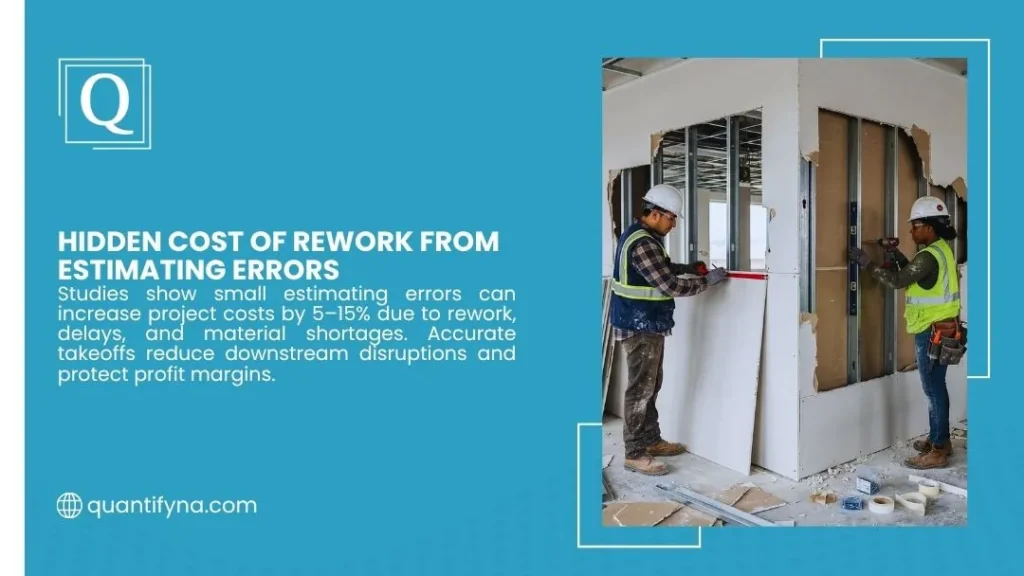
This reduces material waste and prevents underestimating labor requirements. For example, miscalculating drywall installation quantities by even a small margin can significantly impact project profitability.
Contractors who rely on structured drywall takeoff processes often report better bid accuracy and fewer costly adjustments during construction.
The ROI of Outsourcing Drywall Estimating
Outsourcing drywall estimating costs might seem like an added expense at first glance. But when viewed through the lens of return on investment, the picture changes.
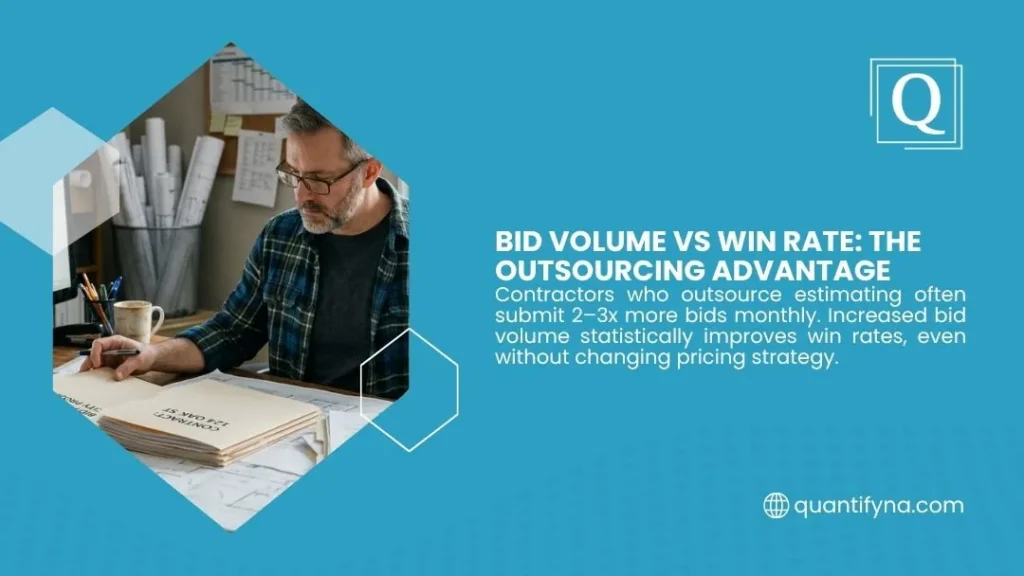
Faster turnaround time allows contractors to bid on more projects. Submitting more bids increases the likelihood of winning work. At the same time, accurate estimation reduces the risk of underpricing or overpricing.
Labor efficiency improves as internal teams focus on project execution rather than takeoffs. Estimating errors, which can cost thousands of dollars per project, becomes less frequent.
A detailed look at the ROI of outsourcing estimating shows that contractors often recover their estimating costs through improved bid accuracy and higher win rates.
When Should You Outsource Drywall Estimating?
Timing plays a crucial role in deciding when to outsource drywall estimating services. Some contractors wait until they’re overwhelmed. Others build outsourcing into their workflow from the start.
Peak workload periods are the most common trigger. When multiple bids arrive at once, internal teams struggle to keep pace. Outsourcing provides immediate relief. Companies without a dedicated estimator often rely entirely on external support. This approach works well for small to mid-sized businesses aiming to scale without increasing overhead.
Large commercial drywall projects also benefit from outsourcing. These projects demand precise estimation and detailed scope review, which can strain internal resources. Contractors facing challenges with estimating without enough staff often find outsourcing to be the most practical solution.
Common Mistakes That Increase Drywall Estimating Costs
Estimating issues rarely come from one major mistake. More often, they build up from smaller oversights that go unnoticed until it’s too late. Each one might seem minor on its own, but together they can push project costs well beyond expectations. Here’s how these common mistakes typically show up in drywall projects:
| Mistake | What Happens on the Project | Cost Impact |
| Incomplete plan review | Missing wall types or ceiling details | Material shortages or overordering |
| Ignoring local labor rates | Using generic labor assumptions | Underpriced or overpriced bids |
| Manual quantity takeoffs | Measurement inconsistencies | Higher error margin |
| Poor scope interpretation | Misreading specifications | Rework and delays |
| No material breakdown | Overlooking items like screws or joint compound | Budget gaps during execution |
| Rushed estimating process | Skipping detailed checks | Increased risk of bid errors |
Take incomplete drawings as an example. When plans lack clarity, estimators often fill in the gaps based on assumptions. Those assumptions don’t always match site conditions, which leads to adjustments later.
Labor rates create another challenge. A drywall installation in one region may require different labor inputs compared to another. If those differences aren’t accounted for, the estimate loses its accuracy before the project even begins.
Manual takeoffs are still common in smaller teams, but they carry a higher risk of inconsistency. Even experienced estimators can miss details when working under pressure. Understanding how these issues connect to estimating errors in construction helps explain why accuracy matters so much. Preventing mistakes at the estimating stage is often the simplest way to protect project margins.
Choosing the Right Drywall Estimating Services Provider
Selecting a drywall estimating partner isn’t just about comparing prices. The real question is whether the provider understands how drywall actually works on-site.
A reliable estimating service should be able to read between the lines of construction documents. Plans rarely tell the full story. There are always details that require interpretation, transitions between wall systems, coordination with other trades, or sequencing of installation. Estimators with field experience tend to handle these situations better.
Software familiarity also plays a role, but it’s not the only factor. Many providers use tools like PlanSwift or OST, yet the quality of output depends on how those tools are used. Clean, organized reports with clear quantities and notes make a noticeable difference during bid review.
Turnaround time is another consideration. Fast delivery matters, but speed shouldn’t come at the cost of accuracy. A well-balanced estimating process allows enough time for review without delaying submissions.
It also helps to look at sample work. A detailed estimate should include clear material quantities, breakdowns by scope, and supporting visuals where needed. This makes it easier to verify numbers and explain pricing internally.
Contractors who partner with experienced drywall estimating services often notice a smoother workflow. Estimates arrive in a format that aligns with their process, which reduces back-and-forth and saves time during bid preparation.
Final Cost Example: Real Project Scenario
To understand outsourcing drywall estimating costs in context, consider a real-world example.
| Project Type | Size | Estimated Outsourcing Cost |
| Office fit-out | 10,000 sq ft | $500,000 – $2,500,000+ |
| School building | 30,000 sq ft | $9,000,000 – $16,500,000 |
| Hospital project | 50,000 sq ft | $17,500,000 – $40,000,000+ |
Note: Costs heavily depend on the quality of materials, location, and complexity. In each case, the cost of estimation remains small compared to the total project value. Yet it directly influences bid accuracy, material planning, and labor allocation.
Why Contractors Are Moving Toward Outsourcing
The construction industry faces a well-documented labor shortage. According to the U.S. Bureau of Labor Statistics, workforce gaps continue to impact project timelines and costs.
At the same time, project complexity continues to rise. Commercial drywall systems now require greater precision, and contractors must submit bids faster than ever.
Outsourcing drywall estimating costs offers a practical response to these challenges. Contractors gain access to experienced estimators, advanced tools, and scalable support without long-term commitments.

Get More Accurate Estimates Without Expanding Your Team
Accurate drywall estimating isn’t just about numbers; it shapes how confidently you bid, how efficiently you plan, and how often you win work. When estimating slows down or lacks precision, it creates a ripple effect across the entire construction project. Deadlines tighten, margins shrink, and opportunities slip away.
That’s why many contractors are rethinking how they approach estimating. Instead of stretching internal teams thin, they’re choosing support that fits seamlessly into their existing workflow. The goal isn’t to replace your team, it’s to strengthen it with dependable, precise estimation when you need it most.
Quantify North America operates with that exact mindset. Built on decades of real-world commercial experience, their approach focuses on delivering clear quantities, organized takeoffs, and practical insights that align with how contractors actually work. Whether you’re handling a surge in bids or tackling a complex drywall project, their team steps in as a natural extension of yours, without disrupting your process.
If you’re aiming to bid for more jobs with confidence while keeping your operations lean, this might be the kind of support worth considering.