Article Summary
A material price escalation clause can adjust a subcontract price when the cost of a specified material changes after an agreed baseline date. Whether an adjustment applies depends on the contract’s trigger, price benchmark, calculation method, cap, and notice and documentation requirements.
| Question | Short Answer |
|---|---|
| What can the clause do? | It may shift some material cost-increase risk from the subcontractor to the general contractor or owner, subject to the agreed terms. |
| When can it apply? | Only when the contract’s trigger, baseline, calculation method, and notice conditions are met. |
| What supports a request? | Baseline quotes, dated invoices, benchmark data, covered quantities, and timely written notice. |
| What limits it? | A negotiated cap, the prime contract terms, and the owner’s procurement rules. |
| Who should draft it? | Counsel, or a standard-form amendment adapted to the project and reviewed before signature. |
What Is a Material Escalation Clause?
A material escalation clause is contract language that may permit a price adjustment when the cost of a specified material changes after a set baseline date. In a lump-sum subcontract, the subcontractor may bear material increases between bid and purchase unless the signed subcontract or incorporated terms provide an adjustment mechanism. An escalation clause can permit an agreed adjustment, subject to its conditions and limits.
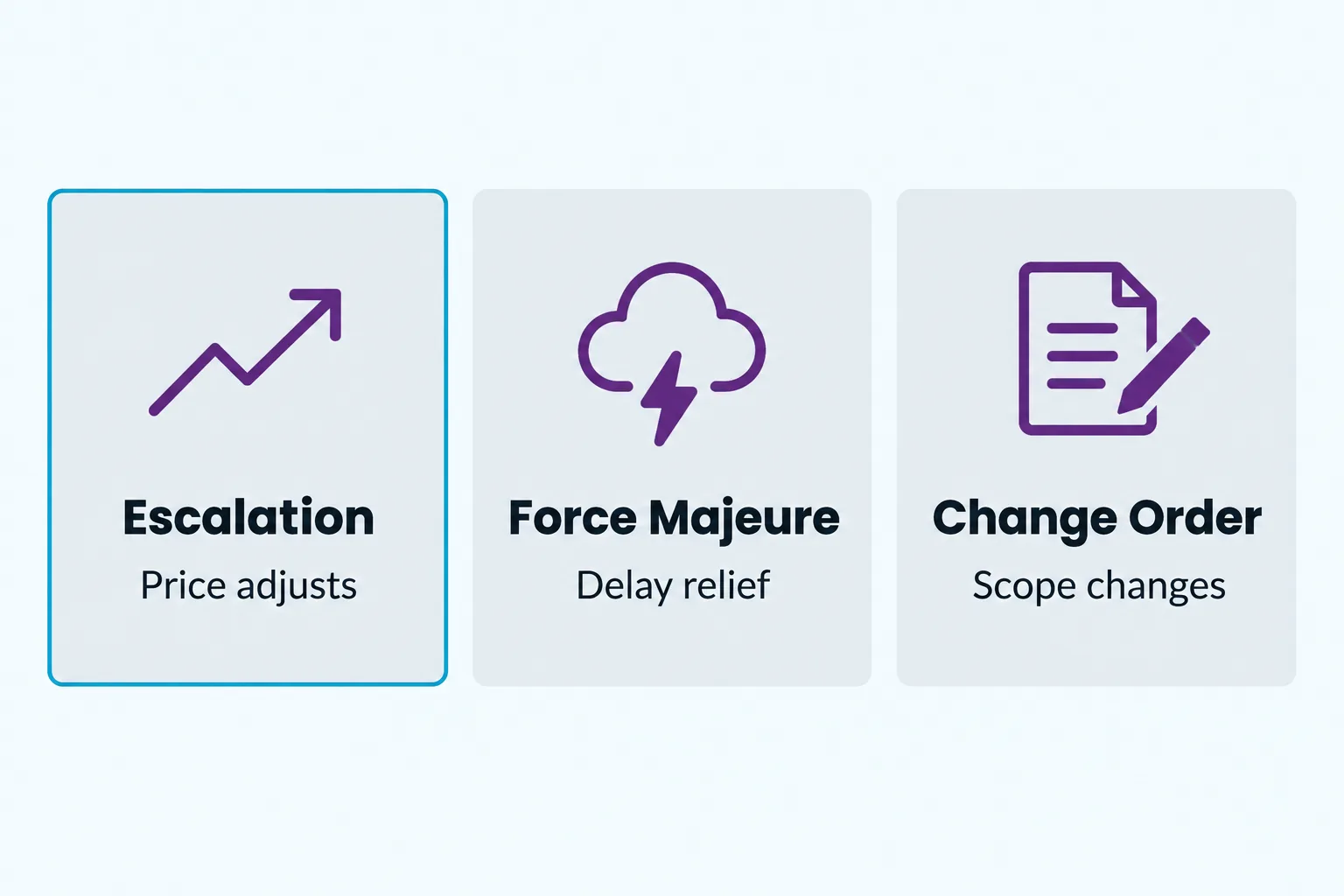
Three contract mechanisms are easy to confuse. An escalation clause may adjust price under specified conditions. A force majeure provision may address delay or other relief, depending on its wording and applicable law. A change order generally documents an agreed contract change; a price increase on unchanged scope does not automatically create entitlement to one. Review the contract language before submitting a request.
For commercial finish trades, possible materials to identify include gypsum board, cold-formed framing steel, carpet, resilient flooring, adhesives, and coatings. The exact list should match the project specifications and supplier pricing. A two-way clause may also require a downward adjustment when covered material prices fall; state clearly whether the agreement works in one direction or both.
Why Material Price Risk Can Fall on Subcontractors
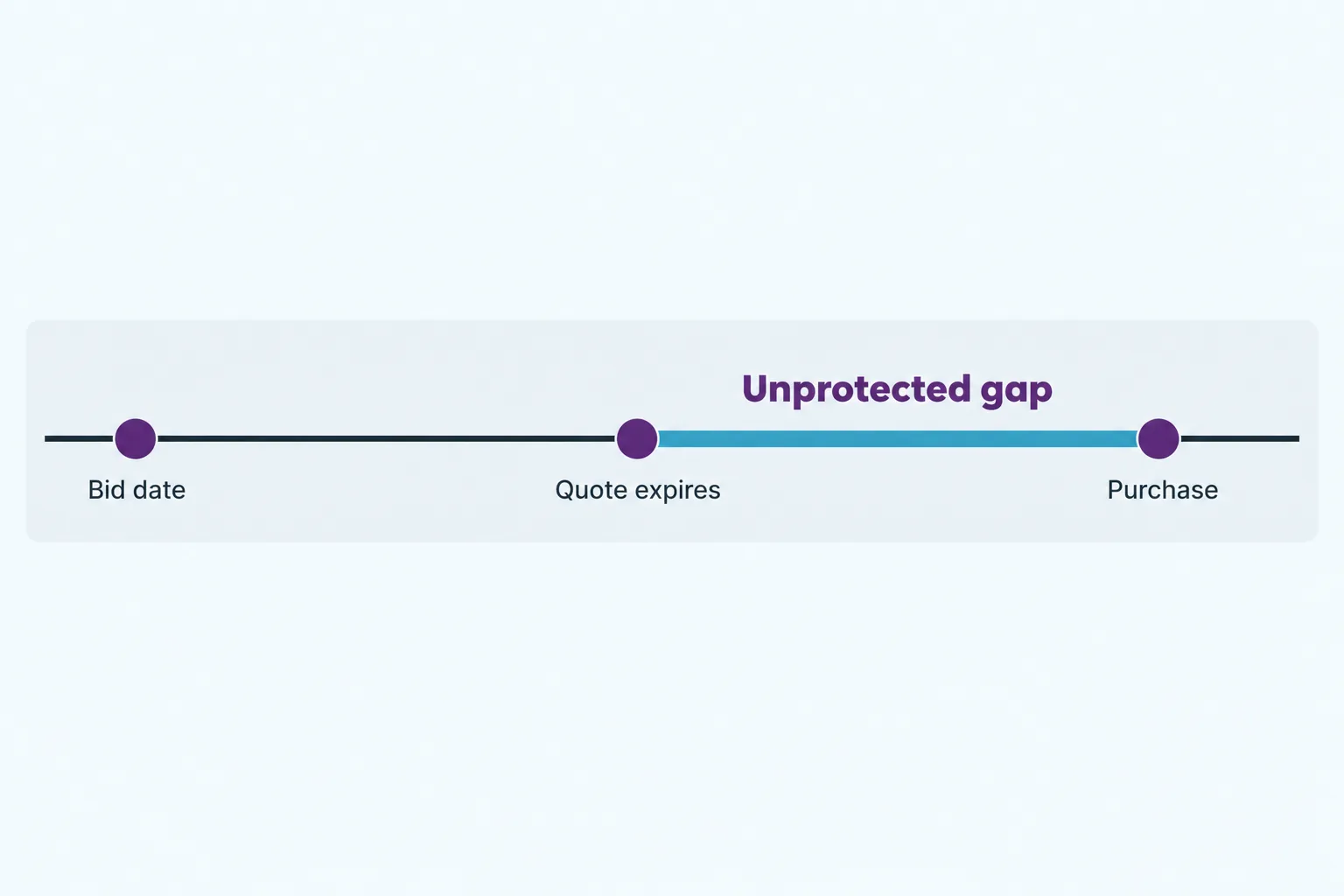
Supplier quotes can expire before a subcontractor purchases the material. When the subcontract price stays fixed after the quote expires, the subcontractor may carry the difference unless the agreement provides price relief.
Flow-down provisions can pass prime-contract obligations to a subcontractor, but the price protections may not match. Do not assume that standard conditions or a prime-contract clause automatically protect the subcontractor; check the signed subcontract, incorporated documents, and any amendments. Tariffs, freight, and lead times may affect costs, so specify whether they are included in the covered adjustment. Build and retain a dated bid baseline through documented supplier pricing and construction estimating.
Seven Terms to Define in a Material Price Escalation Clause
| Term | What It Controls | Practical Setting to Negotiate |
|---|---|---|
| Named materials | Which items qualify for adjustment | List specific products (Type X board, 25-gauge stud, broadloom carpet), never “all materials” |
| Baseline price and date | The reference point every increase is measured from | Tie it to the bid date or the supplier quote date, and attach the quote |
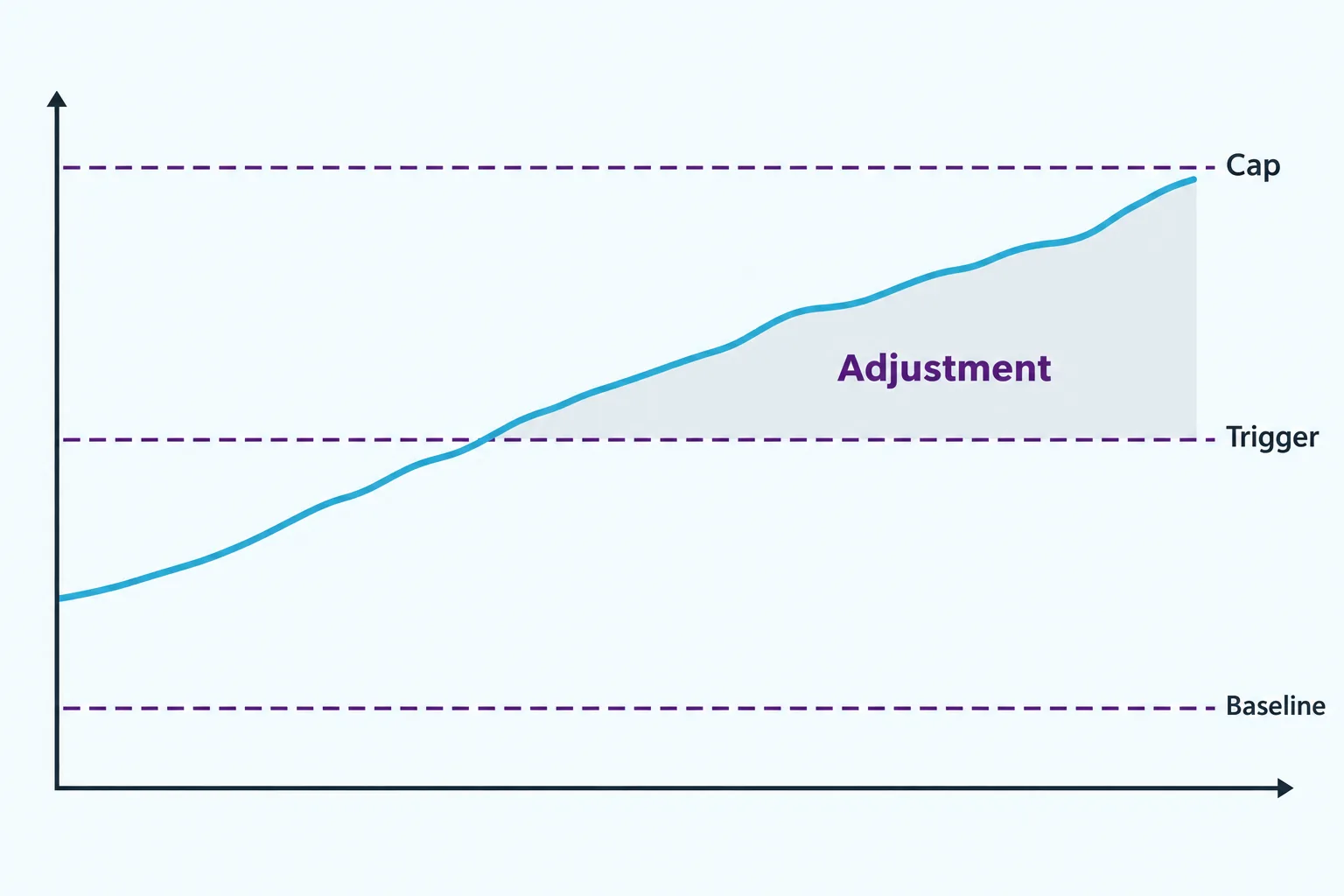
| Trigger threshold | How far a price must move before relief starts | A stated percentage above baseline, agreed in writing with the general contractor |
| Calculation method | How the adjustment is calculated | Define whether the threshold is deducted, which quantities count, and whether the parties share the increase |
| Price benchmark | The proof standard for the increase | A published index, a documented supplier invoice, or both together |
| Cap and exit rights | The ceiling on recovery and what follows | Define whether parties renegotiate, substitute a product, suspend, or terminate once the cap is hit |
| Notice and documentation | Whether the claim survives review | A fixed number of days from the price change, with named backup documents |
A request can be disputed when the clause does not clearly define notice deadlines or the records required. A material price escalation clause template is only a starting point: fill in the project’s actual products, supplier or index, baseline, formula, and eligible quantities. Standardized bid paperwork can help keep those details consistent, just as a drywall bid template can organize inclusions and exclusions.
How to Choose a Material Price Index or Cost Benchmark
| Benchmark | Source | Best Use |
|---|---|---|
| Published commodity price index | Government statistical series for the specific commodity | Objective movement on widely traded goods such as gypsum products or steel mill products |
| Construction cost indexes | Engineering News-Record | Broad market movement across materials and labor, useful as a secondary reference |
| Documented supplier quotes and invoices | The subcontractor’s own supply chain | Trade-specific or single-source products no public index tracks accurately |
An index-based clause should identify the exact series, base period, comparison period, and data version to use. The Bureau of Labor Statistics’ PPI guide for price adjustment explains why these details matter, including index revisions and the limits of the data. A broad index may not track the price of a specialized product, so compare the chosen series with documented supplier quotes for the actual material. Historical trade-cost context, such as drywall cost information, can inform estimating but does not replace the clause’s agreed benchmark.
How to Calculate a Material Price Adjustment
The contract should state whether the adjustment uses actual purchase costs, an index change, or a defined combination. It should also say whether the trigger removes the first portion of an increase or only determines when adjustment begins. Those approaches produce different results.
Illustrative example only: Assume a clause covers 1,000 units at a baseline price of $100 per unit, with a 5% trigger. If the clause says the buyer pays only for increases above the trigger and the documented price rises to $125, the trigger price is $105. The amount above that trigger is $20 per unit, or $20,000 for 1,000 eligible units, before any agreed cap or cost-sharing adjustment. These figures are hypothetical; the signed clause controls the formula and eligible quantities.
Sample Escalation Clause Language
> Illustration only, not legal advice. “The Contract Sum is based on the unit prices for gypsum board and cold-formed steel framing stated in the quotation dated \[DATE\], attached as Exhibit A. If the Subcontractor’s documented cost for either named material increases more than \[X\] percent above the Exhibit A price, the Contract Sum shall be adjusted by the amount of the increase above that threshold for quantities purchased after the date of the increase. The Subcontractor shall give written notice within \[X\] days of the price change and shall furnish supplier invoices and the applicable published index data. Total adjustments under this provision shall not exceed \[AMOUNT\], after which the parties shall meet to renegotiate, substitute materials, or terminate the affected scope.”
Have counsel review a clause before it enters a signed subcontract. ConsensusDocs describes its price escalation clause resources and amendments, which can be a reference point for parties reviewing available standard-form materials. Check the current document and its terms before relying on it.
How Prime Contracts and Public Rules Affect Escalation
The effect of a clause can depend on governing law, project type, the prime contract, and the owner’s procurement rules. For federal procurements, the FAR includes provisions for fixed-price contracts with economic price adjustment; those federal rules are not a plug-in clause for private subcontracts. Check the relevant prime and subcontract documents, and have state-specific or public-work questions reviewed by qualified counsel.
When an Escalation Clause Backfires
An open-ended clause may concern a general contractor because it does not define the potential adjustment. A two-way clause may require credits if covered prices fall. Vague material descriptions, missing baseline evidence, or missed notice deadlines can make a request difficult to support. Compare any cap with the risk the clause is intended to address, and state how the parties will handle costs above it.
Another option is to show a documented cost range and state any contingency openly. Three-point estimating can help structure that range for discussion with the general contractor.
How Accurate Quantities Support an Escalation Claim
A takeoff can help substantiate the quantities included in an adjustment request, but the contract defines what is eligible. If the records do not identify how many sheets, square yards, or gallons of a named product were purchased during the covered period, it may be harder to support the requested amount. Separate quantities by product and area where the plans allow.
Keep the bid-date material list, date it, and retain the supplier quote. A structured drywall takeoff that itemizes board type, thickness, and location can support quantity records for the original bid and a later request.
Pre-Signing Checklist for Subcontractors
| Before signing, confirm | What to check |
|---|---|
| The clause is part of the executed agreement | Review the subcontract, incorporated documents, and amendments. |
| Covered materials and dates are specific | Attach the baseline quote or identify the exact index and comparison period. |
| The calculation can be followed | Define the trigger, formula, eligible quantities, caps, and treatment of price decreases. |
| The process is workable | Set notice deadlines, required records, review steps, and the change-order path. |