Estimating a small tenant build-out is one thing. Estimating 80,000 square feet across multiple phases with alternates, revisions, and aggressive timelines? That’s a different animal. This guide explains how to estimate large commercial flooring projects using disciplined takeoffs, accurate labor modeling, and structured review systems that protect your margins.
How to estimate large commercial flooring projects
Large commercial flooring projects don’t fail because someone can’t multiply square footage. They fail because assumptions go unchecked. An estimator misses waste on a patterned carpet. A crew rate gets copied from the last job without adjusting for night work. Supplier pricing shifts, and no one updates it. Individually, those look minor. Combined, they wipe out profit.
So when we talk about how to estimate large commercial flooring projects, we’re talking about control. Control of scope. Control of quantities. Control of labor. Control of risk. That control starts with drawings, but not just measuring them.
Reading Plans Like You’ve Been Burned Before
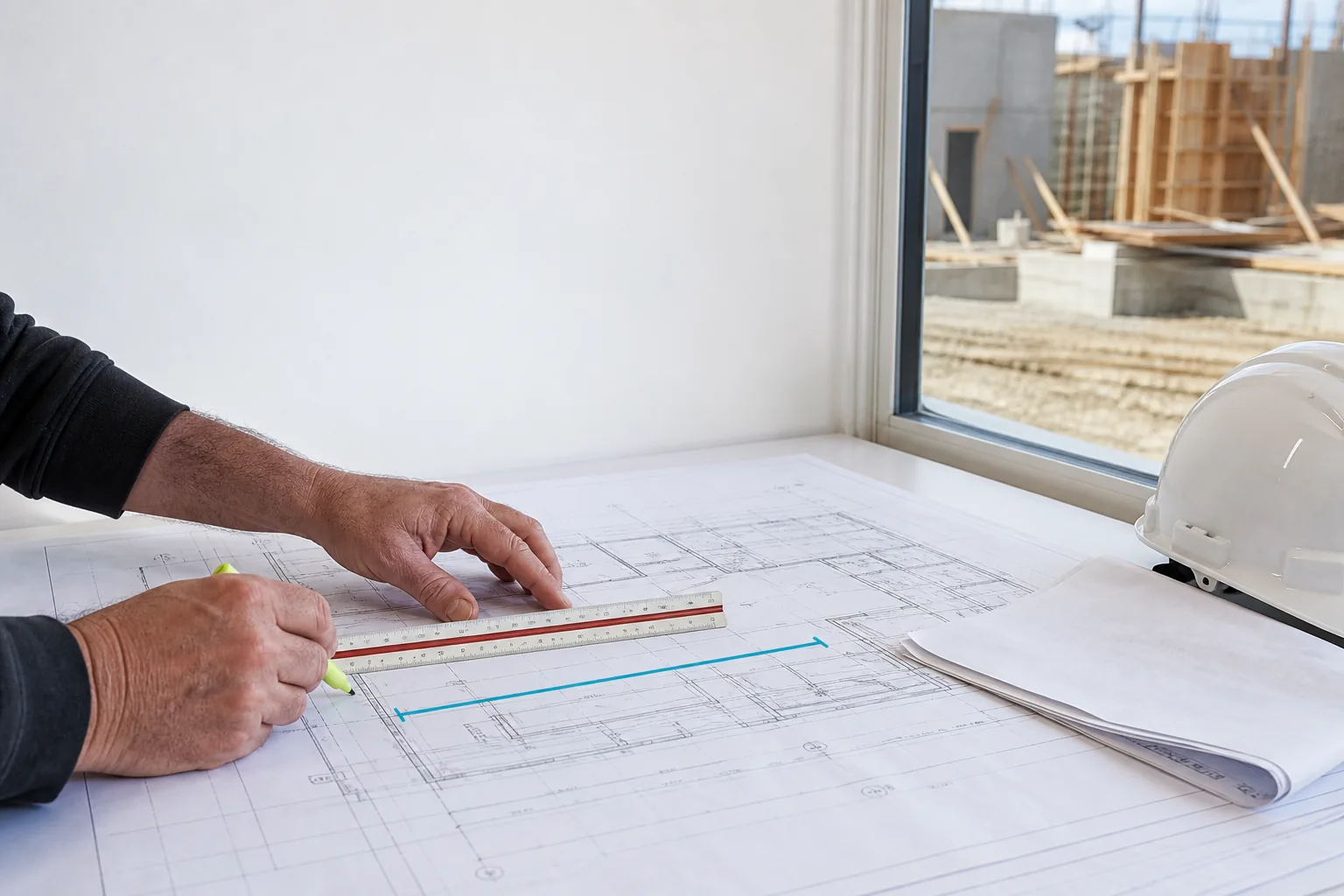
Commercial drawings lie by omission. They don’t always show phasing complications. They rarely scream about substrate inconsistencies. And they never warn you about tight elevator schedules.
Before you open flooring estimating software, study the finish schedule against the architectural sheets. Confirm every floor type, transition, stair detail, and wall base height. Cross-reference addenda. Check alternates. If something feels unclear, it usually is.
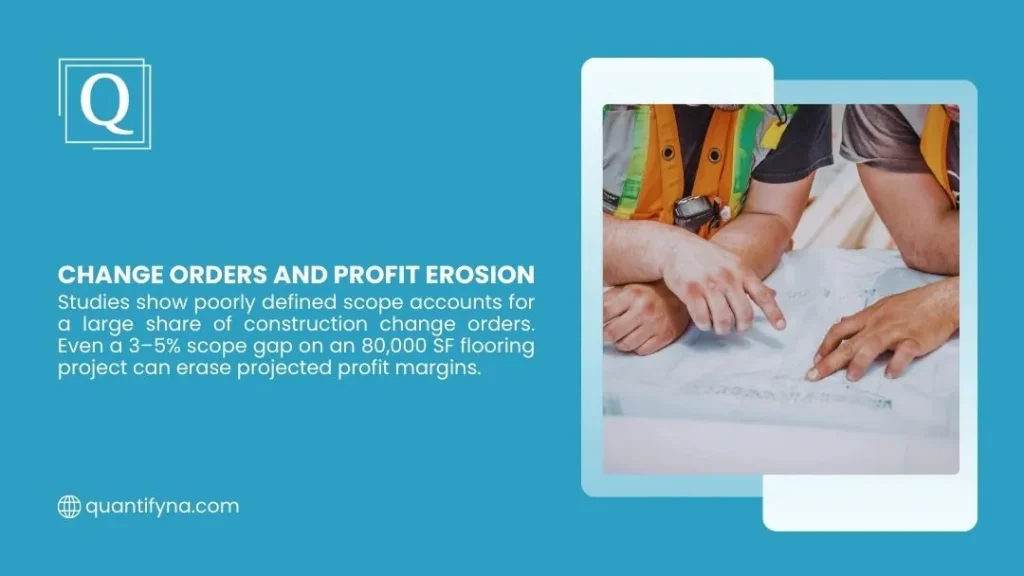
The research shows that documentation gaps remain one of the top sources of construction disputes. That’s not academic theory. That’s unpaid change orders. Once verified, move into the flooring takeoff.
Structured Flooring Takeoff for Large Layouts
In major commercial flooring projects, geometry gets complicated fast. Columns. Angles. Open atriums. Multi-level zones. Expansion joints. Transition strips. A serious flooring takeoff does more than trace rooms. It reflects professional flooring estimating discipline, separating scope logically before applying pricing.
It isolates each material zone individually. It separates install phases. It calculates stair treads separately. It applies waste percentages based on layout complexity, not guesswork. Here’s how a professional takeoff may look:
| Area | Material | Base SF | Waste % | Adjusted SF |
| Level 1 Open Office | Carpet Tile | 18,200 | 7% | 19,474 |
| Lobby | Porcelain Tile | 3,950 | 10% | 4,345 |
| Level 2 Corridor | LVT | 9,600 | 5% | 10,080 |
| Stair Treads | Rubber | 820 | 12% | 918.4 |
Waste isn’t padding. It’s realism. Patterned carpet requires alignment. Tile layouts require cuts. Complex transitions increase scrap. Account for waste honestly, because the supplier invoice will.
It is also critical to understand the tile cost per square foot or carpet cost per square foot relative to the specific pattern. A herringbone LVT layout will yield significantly higher waste than a standard staggered bond.
Material Costs and Market Prices
Material pricing is not static. A complete commercial flooring estimate separates core materials from secondary items. Strong estimators apply principles similar to materials estimating to prevent accessory costs from slipping through unnoticed.
According to U.S. Census Bureau construction spending data, material volatility has remained a factor in commercial builds over recent years. Adhesives, underlayments, freight, these fluctuate more than most estimators admit. A complete commercial flooring estimate separates core materials from secondary items.
| Cost Category | Unit Cost | Extended Cost |
| Carpet Tile | $3.35 / SF | $65,238 |
| LVT | $2.90 / SF | $29,232 |
| Tile | $4.85 / SF | $21,068 |
| Adhesives | Allowance | $8,600 |
| Moisture Mitigation | $1.15 / SF | $11,500 |
Disclaimer: These figures represent general cost estimates. Actual project expenses may vary based on your location, labor rates, and the specific vendor or materials selected.
Notice the separation. Adhesives and mitigation often get overlooked. They shouldn’t. And always confirm pricing before submission. Market prices shift. Supplier quotes expire. A commercial flooring project can sit in review for weeks before an award.
Labor Costs: Where Most Estimates Break
Labor costs are not square-foot math. Estimators should apply parametric estimating models, using historical data to correlate project size with required man-hours, to sanity-check their labor budget.
They depend on crew efficiency, access constraints, schedule compression, union rules, and jobsite coordination. The Bureau of Labor Statistics publishes wage averages, but wage averages don’t equal production rates.
Production rate is what matters. If a carpet crew averages 3,000 square feet per day in an open layout, that number drops in tight corridors. Tile rates vary even more depending on layout complexity.
| Flooring Type | Avg Daily Production | Crew Days | Labor Budget |
| Carpet Tile | 3,000 SF | 6 | $17,400 |
| LVT | 2,200 SF | 5 | $15,600 |
| Tile | 1,000 SF | 5 | $18,200 |
And here’s the part many skip: schedule risk. If the project compresses, overtime enters the picture. That changes everything. When estimating how to estimate large commercial flooring projects properly, labor forecasting deserves as much scrutiny as material quantities.
Flooring Estimating Software: Tool or Crutch?
Software is essential for scale, but it doesn’t replace judgment. A professional building estimation requires a structured audit trail. In 2026, the best estimating tools integrate BIM (Building Information Modeling) to extract quantities directly from 3D models, reducing manual entry error.
Professional flooring takeoff software allows layered drawing review, material tracking, revision control, and export to a flooring estimate template Excel format for executive review.
Free flooring estimating software tools may work for small bids. Large commercial construction projects require structured audit trails and revision tracking. A serious software solution protects the project estimator when scope changes midstream.
The right software for flooring contractor operations does three things well:
- It tracks quantities accurately.
- It documents revisions clearly.
- It produces reports that clients understand.
Anything less creates exposure.
Risk Mitigation and Review
Before submission, perform a second review, then a third. Cross-check material quantities against finish schedules. Confirm waste assumptions. Verify transitions. Validate labor rates. Confirm supplier quotes.
Large commercial flooring projects reward discipline. Think of it like adefinitive estimate; the closer you get to the actual project start, the less guessing there should be. Reviewing the construction estimating services cost against the potential loss from a bad bid often makes professional consulting a smart insurance policy.

The Reality of Large Commercial Flooring Projects
An initial takeoff shows 40,000 square feet. After separating phasing, adjusting waste, isolating stairs, and confirming alternates, that number creeps to 43,000. Labor is extended due to night shift restrictions. Adhesive allowances increase due to moisture mitigation requirements.
The estimate rises by 5 to 7% compared to the first pass. That five percent isn’t inflation. Its accuracy. And that’s why understanding how to estimate large commercial flooring projects at scale requires more than just measurement. It requires experience, structured review, updated pricing, disciplined labor forecasting, and reliable flooring estimate software.
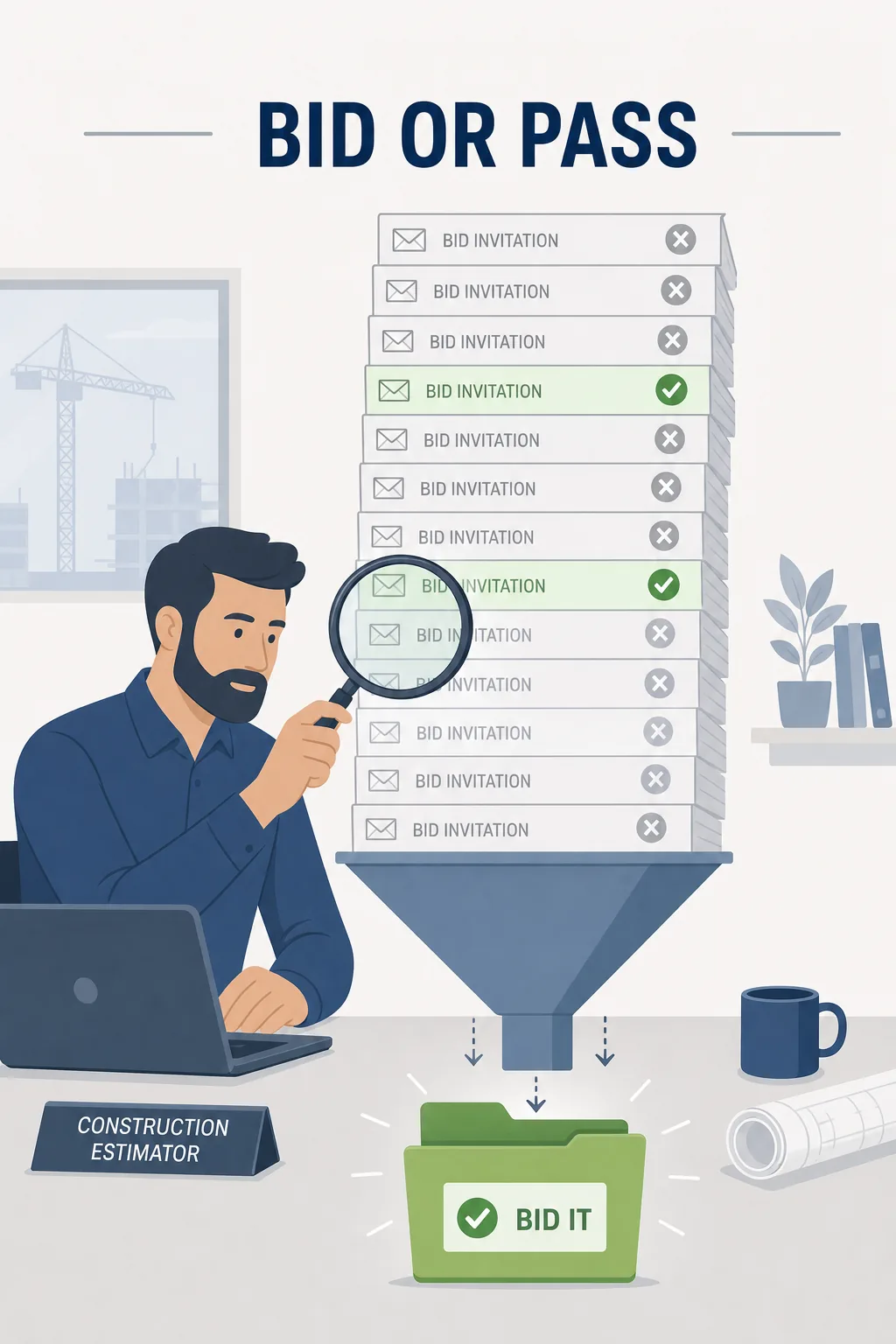
If you’re struggling to keep up with bid volume, learning how to bid more jobs with a small team often starts with better systems. Whether you are doing painting estimating or flooring, the principles remain: precision under pressure wins.

What This Means for Your Next Bid
Large commercial flooring estimating is not about speed alone. It’s about precision under pressure. If your estimating process lacks structured takeoffs, controlled waste assumptions, real labor modeling, and disciplined review, profit margins become guesswork.
But when you approach how to estimate large commercial flooring projects with methodical cost estimating systems, transparent documentation, and software that supports your workflow, your bids carry confidence.
And confidence wins jobs. If you’re refining your estimating approach or looking for professional estimating support to handle overflow, now is the time to tighten the process. Because in commercial construction, the numbers always tell the truth eventually.