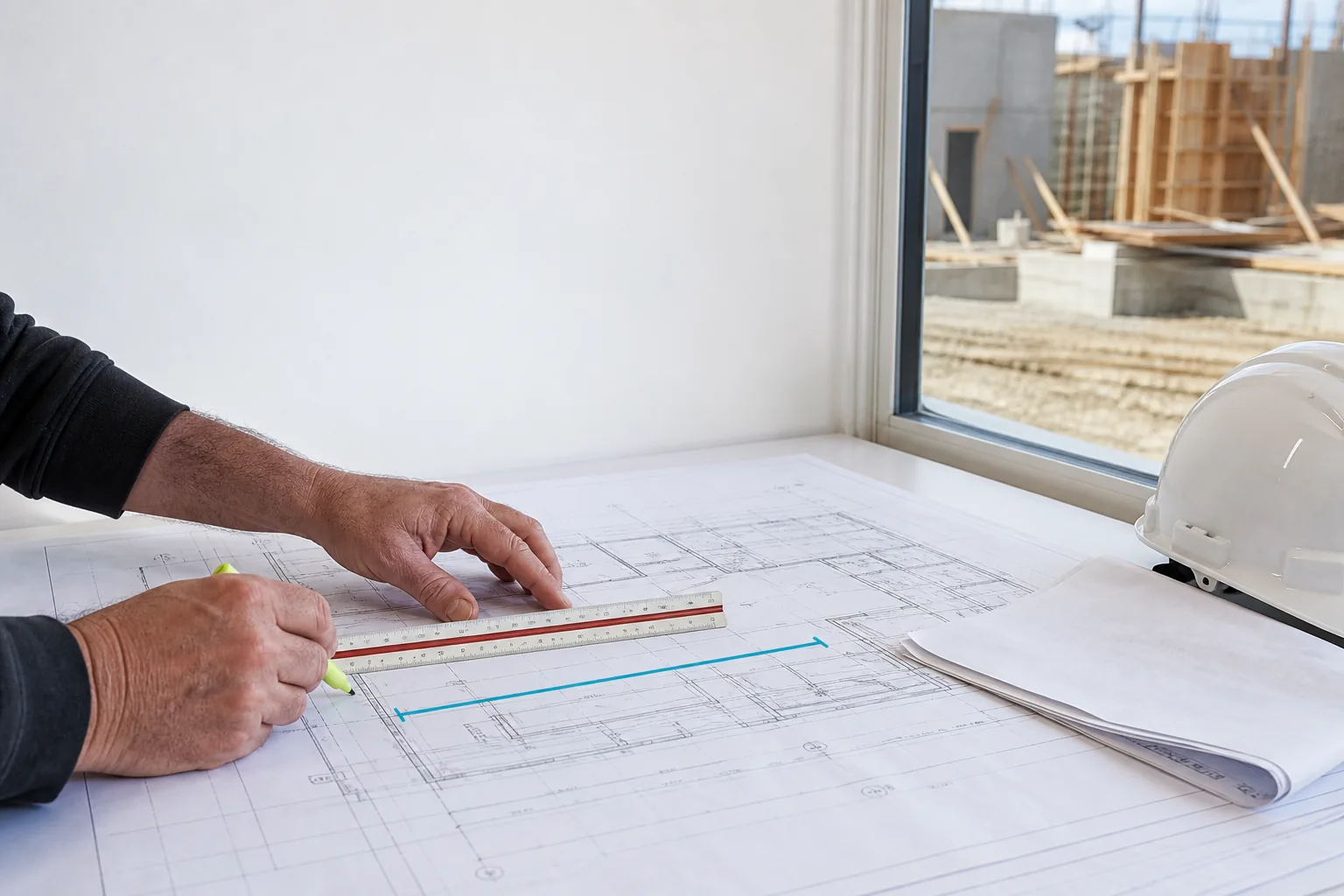
Drywall work makes up 15-20% of most construction budgets, yet many contractors struggle with accurate cost calculations. Poor drywall estimating leads to lost profits or losing bids to competitors.
I have worked with multiple contractors who either underbid jobs and lost money or overbid and watched projects go to others. The ones who succeed have figured out the systematic approach to drywall estimating that protects their margins.
In this article, you will have the full guide on what is drywall estimating, its key components and also some common mistakes that you can avoid.
What Is Drywall Estimating?
Drywall estimating is the calculation of the total cost of installing drywall by analyzing material quantities, labor requirements, and project-specific factors. This process determines whether drywall jobs generate profits or create losses.
Accurate drywall estimating requires understanding how different wall heights, ceiling types, and finish levels affect both material usage and installation time. Each project presents unique challenges that impact costs.
Professional estimators consider factors beyond basic square footage. Room configuration, finish quality, access difficulty, and schedule constraints all influence final project costs significantly.
The foundation of successful drywall businesses relies on consistent, accurate drywall estimating that accounts for all variables while remaining competitive.
Key Components of Drywall Estimating
Knowing what goes into drywall estimating helps you as a contractor avoid missing critical cost elements. Each component contributes to the total project expense.
Cost Component | What It Includes | Typical % of Total |
Materials | Sheets, screws, tape, mud, corner bead | 30-40% |
Labor | Hanging, taping, mudding, sanding, finishing | 45-55% |
Equipment | Lifts, tools, scaffolding | 5-10% |
Overhead & Profit | Insurance, travel, markup | 15-25% |
Drywall Materials include sheets in various sizes and thicknesses based on application. Don’t forget fasteners, joint compound, tape, and corner beads in your material calculations.
Labor Costs represent the largest expense in most drywall projects. Understanding labor cost to hang and finish drywall helps contractors price jobs accurately while maintaining healthy margins.
Equipment Needs vary by project size and ceiling height. Lifts and scaffolding rental costs add up quickly on projects with high ceilings or difficult access. Overhead and Profit must be included to keep your business running. Many contractors fail by only covering direct costs without accounting for business expenses.
A Step-by-Step Drywall Estimating Process
Here is the step by step drywall estimating process:
- Calculate Total Square Footage
Firstly, start by measuring all walls and ceilings that need drywall and multiply length times height for walls, and length times width for ceilings.
Break spaces which are complex into smaller sections and calculate each separately. And before moving to the next step, add all sections together for total square footage.
- Determine Sheet Quantities
Divide total square footage by the coverage area of your chosen sheet size. Standard 4×8 sheets cover 32 square feet, while 4×12 sheets cover 48 square feet.
Add 10-15% waste factor for cuts, damaged sheets, and odd-shaped areas. This waste allowance prevents material shortages that delay projects and increase costs.
- Estimate Material Costs
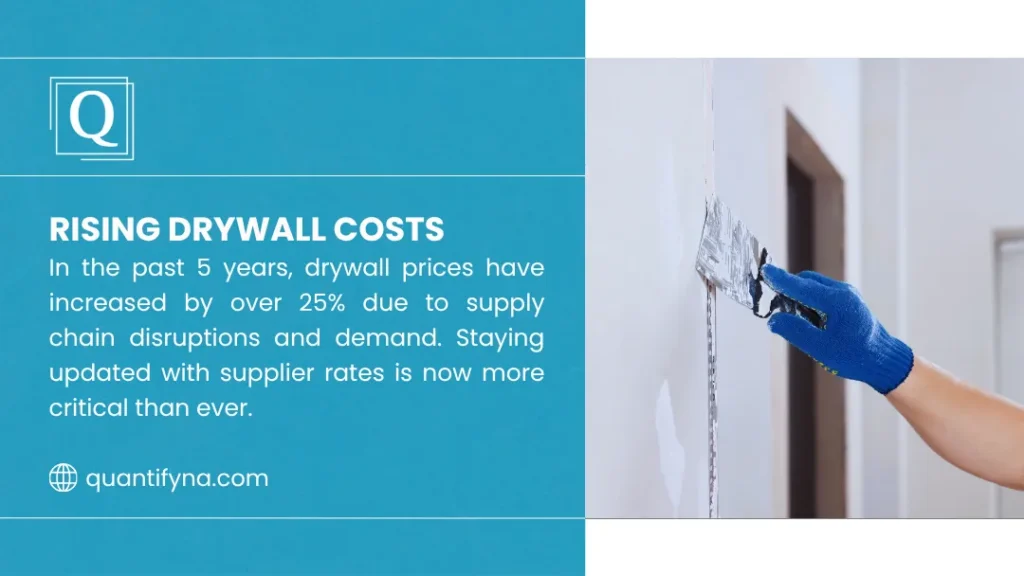
Calculate sheets needed, then multiply by current drywall cost per sheet. Add costs for screws, tape, joint compound, corner bead, and primer.
Get current pricing from suppliers because drywall prices fluctuate based on market conditions. Using outdated prices in estimates can eliminate your profit margin.
- Calculate Labor Requirements
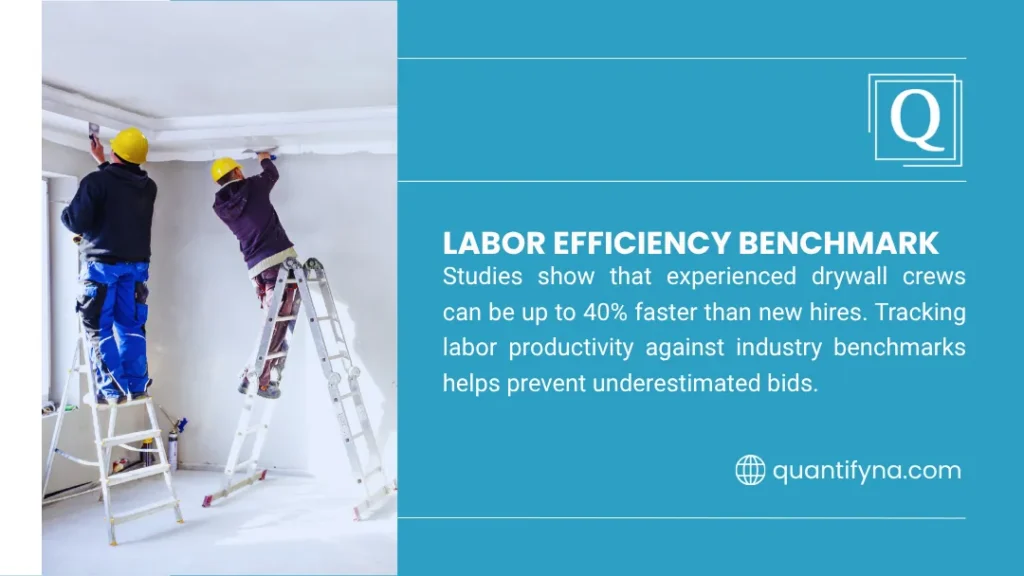
Estimate hours needed based on project size and finish level. Experienced crews typically hang 500-800 square feet per day and finish 300-500 square feet per day.
Factor in ceiling work, which takes longer than walls. High ceilings and complex layouts slow down installation and require more labor hours.
- Include Finish Level Specifications
Different finish levels require different amounts of labor and materials. Level 3 finish needs less work than Level 5, which requires multiple coats and extensive sanding.
Understanding finish level requirements prevents underbidding projects that need premium finishes. Always clarify finish expectations with clients before submitting estimates.
Common Drywall Estimating Mistakes
Many contractors lose money on drywall projects due to predictable errors. These mistakes are easy to avoid once you know what to watch for.
Common Mistake | Cost Impact | How to Avoid |
Underestimating waste | 8-15% material shortage | Use 10-15% waste factor |
Wrong finish level | 20-40% labor overrun | Clarify specs upfront |
Missing prep work | 15-25% labor increase | Include demo and prep |
Forgetting access costs | 10-20% equipment overrun | Account for lifts and scaffolding |
Low Waste Factors cause contractors to run short on materials during installation. This creates delays while waiting for additional deliveries and increases overall project costs.
Finish Level Confusion happens when estimates assume basic finishes but clients expect premium results. Always document finish level requirements in your drywall bid template to avoid disputes.
Missing Prep Work like demolition, insulation, or framing repairs adds unexpected labor hours. Walk every job site and include all necessary prep work in estimates.
Access Challenges increase labor time and equipment needs. High ceilings, tight spaces, or occupied buildings all affect installation efficiency and costs.
Technology for Better Drywall Estimating
Modern tools make drywall estimating faster and more accurate. These technologies help contractors create professional estimates while reducing calculation errors.
Digital Takeoff Software measures walls and ceilings directly from blueprints. This eliminates manual measurements and reduces errors from reading plans incorrectly.
Drywall Calculators automate waste factors and material calculations. These tools speed up the estimating process while maintaining consistency across all quotes.
Mobile Apps let contractors create estimates on job sites during walk-throughs. Quick turnaround on quotes helps win more projects in competitive markets.
Professional drywall takeoff services provide accurate material quantities for contractors who want to focus on sales and installation rather than estimating.
Pricing Strategies for Different Projects
Drywall estimating needs vary based on project type and client requirements. Each market segment requires different pricing approaches.
Residential Projects typically involve smaller quantities with higher service expectations. These jobs often support better profit margins due to personalized customer service.
Commercial Projects have larger volumes with standardized specifications. Price competition is intense, so efficiency and accurate estimating become critical for profitability.
New Construction allows efficient installation with minimal obstacles. Crews work faster on new builds, which should be reflected in labor estimates.
Renovation Work involves more challenges like furniture protection, occupied spaces, and matching existing finishes. These factors increase labor time and should be priced accordingly.
From my experience helping contractors price drywall work, the biggest mistake is using the same rates for all project types without adjusting for complexity differences.
Quality Control for Estimates
Good quality control catches errors before they cost money. These verification steps help ensure drywall estimating accuracy.
Double-Check Measurements by having someone else verify your takeoff calculations. Fresh eyes catch mistakes that you might miss after staring at plans for hours.
Verify Current Pricing with suppliers before submitting bids. Material prices change frequently, and using outdated costs can turn profitable bids into money-losing jobs.
Review Past Projects to compare estimates against actual costs. This historical data reveals patterns in your estimating and shows where adjustments are needed.
Use Checklists to make sure all cost elements are included. Missing even small items like corner beads or primer can hurt profitability on large projects.
Conclusion
A good drywall estimate includes systematic processes and is detail-oriented. Contractors who master these processes win more work while maintaining healthy margins as well.
The key is developing a method for estimating each drywall project consistently that captures all costs while remaining competitive. Technology will assist, but understanding the foundations of drywall estimating are critical.
Implement the process provided in this guide first, and keep track of your results to learn from both success and failure in order to perfect techniques of estimating drywall.
Anything that you can count on being accurate (during last week) in drywall estimating also fortifies the client as it makes sure that the project completes on budget, and on time.
The #1 Most Trusted Drywall Estimating Partner For Contractors
Quantify North America has helped contractors across North America implement accurate drywall estimating solutions for over 15 years. Our team understands the unique challenges facing drywall contractors and provides personalized support to ensure profitable project outcomes. Contact Quantify North America today to learn how our expert drywall estimating services can protect your profit margins while winning more competitive bids. We’ll evaluate your current estimating process and recommend the best solutions for your specific business needs.