
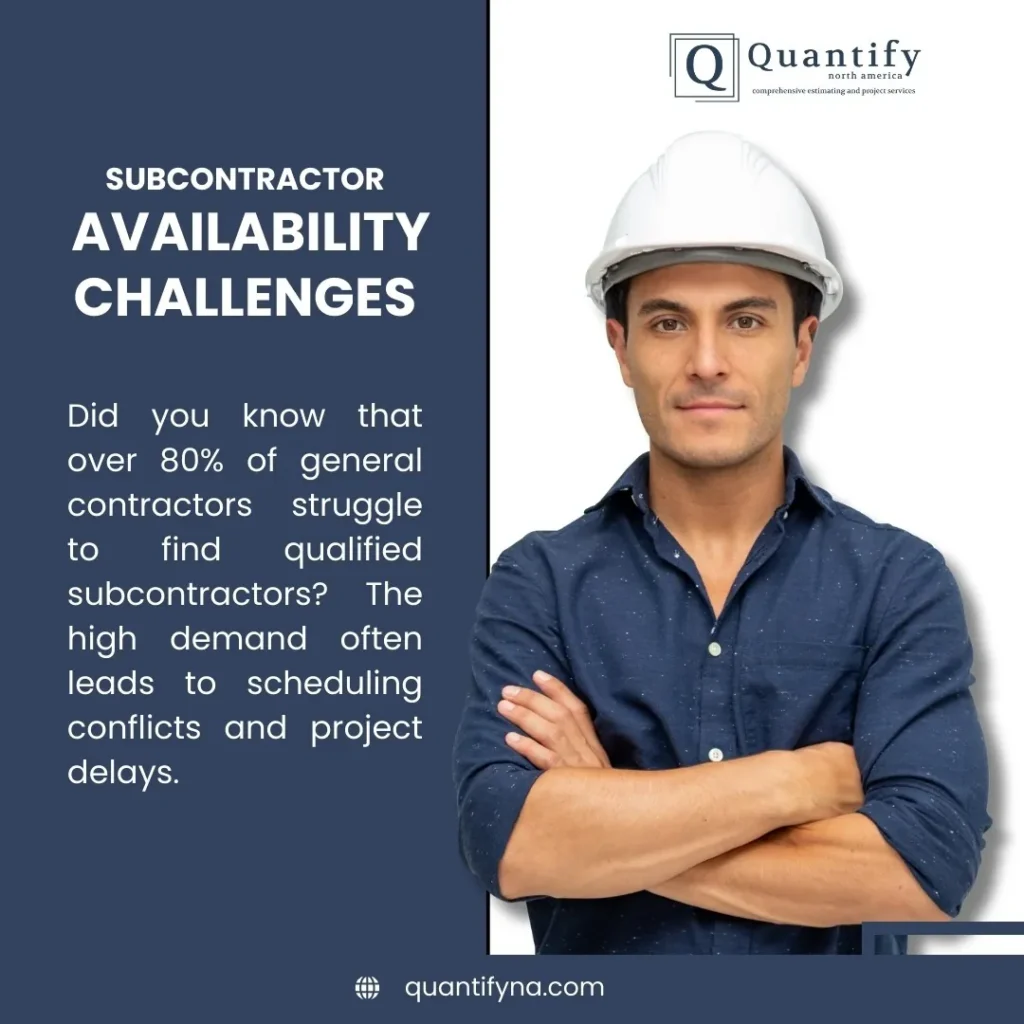
Recent industry studies show that 69% of construction projects experience delays due to subcontractor-related issues, while 82% of general contractors report challenges finding reliable trade partners in today’s competitive market.
Source: WSHBLAW
According to the Associated General Contractors of America, subcontractor performance directly impacts approximately 75% of a project’s quality outcomes and 80% of schedule adherence.
These statistics highlight why finding qualified subcontractors remains a critical priority for construction managers nationwide.
This comprehensive guide examines evidence-based strategies for how to find subcontractors; evaluating, and maintaining relationships with high-performing subcontractors who can help deliver projects on time, within budget, and to specification.
1. The Real Value of Quality Subcontractors
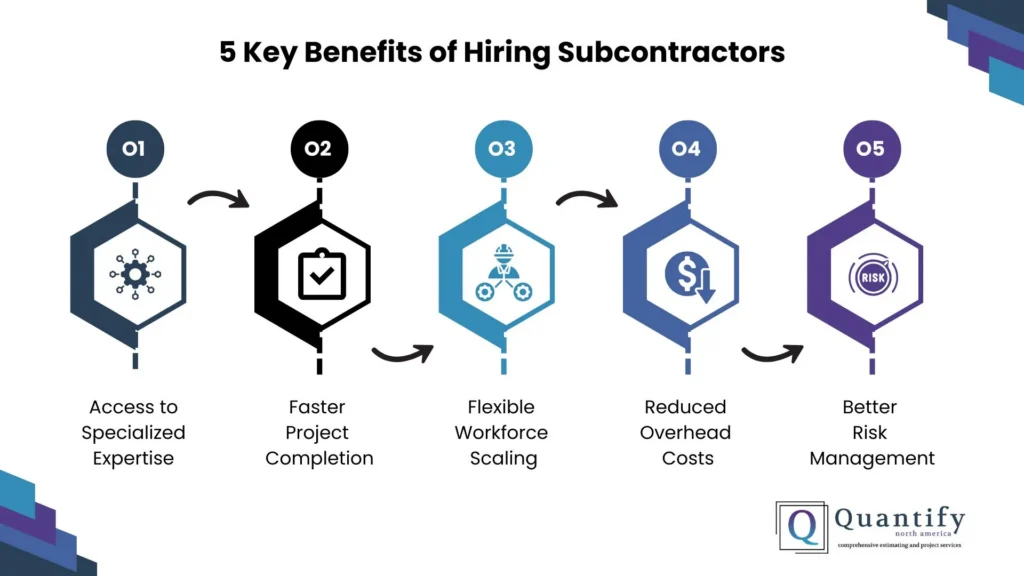
The success of your construction projects relies heavily on the capabilities of your subcontractors. These specialized professionals handle specific aspects of a project, from electrical work and plumbing to drywall installation & painting. Working with skilled subcontractors allows you to:
- Take on larger or more complex projects
- Meet tight deadlines through parallel work processes
- Access specialized expertise without maintaining full-time specialists
- Manage costs more effectively
- Scale your operations up or down based on project demands
However, the benefits only materialize when you partner with reliable, qualified subcontractors who deliver quality work. This makes finding the right subcontractors a critical business process deserving careful attention.
2. Where & How to Find Subcontractors
The search for quality subcontractors requires a multi-faceted approach. Here are the most effective channels to explore:
2.1 Industry Networks and Professional Associations
Construction industry associations serve as valuable hubs for connecting with potential subcontractors. Consider joining or attending events hosted by:
| Association Type | Benefits | Examples |
| National Associations | Broad industry standards and large networks | Associated General Contractors of America (AGC), National Association of Home Builders (NAHB) |
| Local Building Associations | Location-specific connections and regulations | Local Home Builders Associations, Chamber of Commerce construction groups |
| Trade-Specific Organizations | Specialized expertise and focused networking | American Subcontractors Association, specific trade unions |
These organizations typically host regular networking events, maintain member directories, and offer certification programs that can help you identify qualified professionals in specific trades.
2.2 Construction Job Boards and Online Platforms
The digital landscape offers numerous platforms dedicated to connecting contractors with subcontractors:
| Platform Type | Features | Notable Examples |
| Construction-Specific Job Boards | Trade-focused listings and verification systems | ConstructionJobs.com, BuildZoom, Construction Connection |
| General Contractor Marketplaces | Project bidding, ratings, and credentials verification | Angi (formerly Angie’s List), HomeAdvisor, Thumbtack |
| Social Media Platforms | Informal networking and community recommendations | LinkedIn Groups, Facebook construction communities |
When using online platforms, pay particular attention to reviews, ratings, and portfolio examples to get a sense of the subcontractor’s reputation and work quality.
2.3 Local Supply Houses and Building Material Suppliers
Building material suppliers maintain relationships with numerous contractors and often have valuable insights about who does quality work in specific trades. These suppliers frequently serve as informal referral networks:
| Supplier Type | Information They May Provide |
| Lumberyards | Framing and carpentry subcontractors |
| Flooring Suppliers | Flooring installation specialists and estimating resources |
| Electrical Supply Houses | Licensed electricians with good reputations |
| Paint Stores | Professional painting contractors and estimating guidance |
| Drywall Suppliers | Drywall installers and cost information |
Developing relationships with suppliers not only helps you learn how to find subcontractors but can also lead to better material pricing and improved project coordination.
2.4 Word-of-Mouth and Professional Referrals
Despite technological advances, word-of-mouth remains one of the most reliable methods for how to find subcontractors. Consider these sources:
| Referral Source | Value Proposition |
| Other General Contractors | Can recommend specialists they don’t view as direct competitors |
| Architects and Engineers | Work with numerous contractors and can recommend those who execute their designs effectively |
| Former Clients | May have hired other contractors for related work |
| Current Subcontractors | Often know other quality professionals in complementary trades |
When seeking referrals, be specific about your needs, including project type, timeline, budget constraints, and the specific qualifications you’re looking for in a subcontractor.
2.5 Construction Software and Management Tools
Modern construction management software often includes features designed to help find and manage subcontractors:
| Software Type | Subcontractor-Related Features |
| Project Management Platforms | Subcontractor directories, performance tracking, document sharing |
| Bid Management Software | Tools to solicit, compare, and award bids to subcontractors |
| Estimating Software | Integration with estimating processes and subcontractor databases |
These platforms often maintain databases of pre-qualified subcontractors and can streamline the process of soliciting bids and evaluating potential partners.
3. Evaluate Potential Subcontractors
Once you’ve identified potential subcontractors, a thorough evaluation process is essential. This multi-step approach helps ensure you partner with professionals who meet your quality and reliability standards:
3.1 Credentials and Licensing Verification
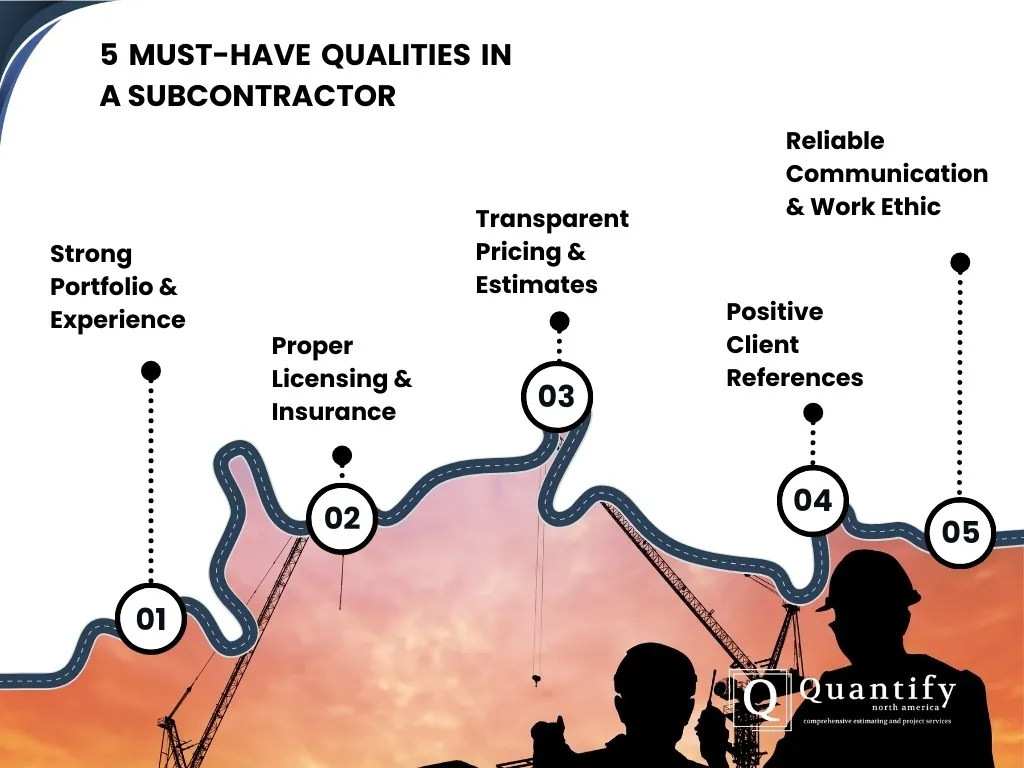
Always verify that potential subcontractors maintain the proper credentials for their trade:
| Credential Type | Importance | Verification Method |
| Trade Licenses | Legal requirement for many specialized trades | State licensing board websites, license documentation |
| Insurance Coverage | Protects against liability and damage claims | Certificates of insurance with adequate coverage limits |
| Bonding | Financial guarantees against project abandonment or quality issues | Bonding company verification |
| Certifications | Demonstrates specialized expertise or training | Certification documentation, association membership |
- Note: Never skip this step, as working with unlicensed or uninsured subcontractors can expose your business to significant legal and financial risks.
3.2 Project History and References
A subcontractor’s past performance offers valuable insights into their reliability and work quality:
| Assessment Area | Questions to Consider |
| Portfolio Review | Does their previous work meet your quality standards? |
| Reference Checks | What do former clients and general contractors say about their performance? |
| Project Complexity | Have they handled projects similar to yours in scope and requirements? |
| Completion History | Do they consistently finish work on schedule? |
When checking references, ask about specific aspects of performance including punctuality, adherence to specifications, communication style, and how they handle unexpected challenges.
3.3 Budget Alignment and Estimating Processes
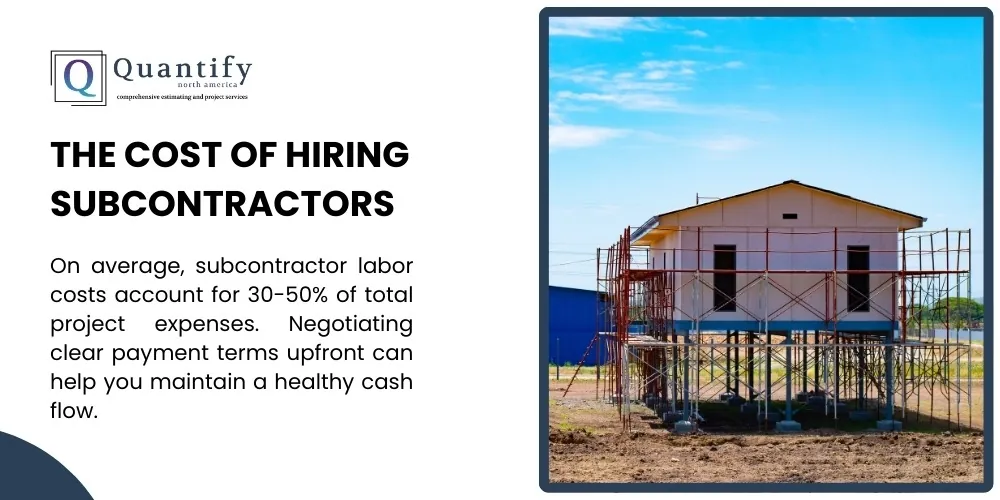
Effective budget management requires subcontractors who provide accurate estimates and stick to them:
| Financial Aspect | Evaluation Criteria |
| Bidding Process | Thoroughness, clarity, and completeness of estimates |
| Estimating Methods | Whether they use top-down or bottom-up estimating approaches |
| Change Order History | Frequency and magnitude of cost adjustments on past projects |
| Payment Terms | Compatibility with your cash flow and payment schedule |
Be wary of bids that seem unusually low, as they may indicate corners being cut or a lack of understanding of the project scope.
4. Build Effective Subcontractor Relationships
How to find subcontractors that are of high quality is only the beginning. Building and maintaining productive relationships ensures they’ll be available when you need them:
4.1 Clear Contract Development
A well-crafted subcontractor agreement establishes expectations and protects all parties:
| Contract Element | Purpose | Key Considerations |
| Scope of Work | Defines exact responsibilities and deliverables | Should be specific, measurable, and comprehensive |
| Timeline | Establishes schedule expectations | Include milestones, coordination points, and completion dates |
| Payment Terms | Clarifies compensation structure and timing | Balance your cash flow needs with subcontractor requirements |
| Change Management | Establishes process for scope modifications | Clear procedure for requesting, approving, and pricing changes |
| Dispute Resolution | Defines how conflicts will be addressed | Consider including mediation clauses before litigation |
Investing time in developing clear contracts prevents misunderstandings and provides a reference point when questions arise during the project.
4.2 Communication Protocols
Effective communication forms the foundation of successful subcontractor relationships:
| Communication Aspect | Best Practices |
| Regular Updates | Establish frequency and format of progress reports |
| Meeting Cadence | Schedule consistent coordination meetings with appropriate participants |
| Documentation | Maintain records of all important communications and decisions |
| Technology Use | Use project management software to centralize communications |
| Feedback Channels | Create mechanisms for two-way feedback throughout the project |
Clear, consistent communication helps prevent misunderstandings and allows for quick resolution of any issues that arise.
4.3 Performance Evaluation and Feedback
Systematic evaluation of subcontractor performance serves multiple purposes:
| Evaluation Purpose | Implementation Method |
| Quality Assurance | Regular inspections against project specifications |
| Performance Tracking | Documentation of adherence to schedule and budget |
| Relationship Building | Constructive feedback discussions |
| Future Selection | Creation of preferred subcontractor list based on performance |
This process not only helps ensure quality on current projects but also builds a database of information for future subcontractor selection.
5. Overcome Common Subcontractor Challenges
Even with careful selection and management, challenges with subcontractors can arise. Being prepared to address these issues helps maintain project momentum:
5.1 Schedule Coordination
Complex projects require careful coordination among multiple subcontractors:
| Coordination Challenge | Solution Approach |
| Sequential Dependencies | Clear documentation of which tasks must precede others |
| Resource Conflicts | Advance planning for shared equipment or workspace needs |
| Schedule Slippage | Buffer periods and contingency planning |
| Trade Overlap | Detailed coordination of transitions between trades |
Using project management software with Gantt chart functionality can help visualize these dependencies and identify potential conflicts before they impact the schedule.
5.2 Quality Control Processes
Maintaining consistent quality across all subcontracted work requires proactive measures:
| Quality Control Element | Implementation Approach |
| Standards Documentation | Clear, written quality expectations for each trade |
| Inspection Protocol | Regular, scheduled quality reviews at critical points |
| Issue Resolution | Prompt addressing of any quality concerns |
| Final Verification | Comprehensive inspection before project handover |
Documenting your quality expectations in writing, preferably with visual examples where applicable, helps ensure all subcontractors understand your standards.
5.3 Payment Management
Fair, timely payment practices help maintain positive subcontractor relationships:
| Payment Aspect | Best Practices |
| Payment Schedule | Clear milestones tied to completion of defined work packages |
| Verification Process | Efficient approval procedures for completed work |
| Prompt Processing | Timely payment upon verification of completed work |
| Retention Management | Fair retention policies with clear release criteria |
Remember that subcontractors often operate with tight cash flow constraints. Prompt payment helps ensure they can meet their obligations and remain available for future projects.
6. Leverage Technology to Manage Subcontractors
Modern technology offers numerous tools to streamline subcontractor management:
| Technology Category | Applications for Subcontractor Management |
| Project Management Software | Centralizes communication, scheduling, and document sharing |
| Mobile Applications | Enables real-time updates and photo documentation from the field |
| Digital Documentation | Simplifies contract management and change order processing |
| Estimating Tools | Facilitates accurate cost estimation and bid comparison |
Investing in these technologies can significantly improve the efficiency of your subcontractor relationships while reducing administrative burden.
7. Frequently Asked Questions About Finding Subcontractors
7.1 How long should it take to find good subcontractors for my construction business?
Finding reliable subcontractors typically takes 1-3 months of active networking and vetting. Most successful contractors continuously build their network rather than searching only when immediate needs arise.
7.2 Where do most contractors find their best subcontractors?
Industry surveys indicate that personal referrals remain the top source (42%), followed by supplier recommendations (27%), trade associations (16%), and online platforms (15%).
7.3 How can I verify a subcontractor is reliable before hiring them?
Start with license verification and insurance confirmation, then check at least three references from similar projects. Many contractors also request financial references and perform site visits to observe active work when possible.
7.4 Should I prioritize cost or quality when selecting subcontractors?
Industry data shows that choosing the lowest bid typically results in 30% more project complications. Leading contractors prioritize demonstrated quality and reliability, treating reasonable pricing as a secondary consideration.
7.5 How many subcontractors should I have for each trade?
Most successful general contractors maintain relationships with 3-5 subcontractors per trade category to ensure availability and competitive pricing while managing the administrative overhead of too many relationships

Ready to Streamline Your Subcontractor Management?
Finding and managing qualified subcontractors requires significant time and expertise. If you’re looking to optimize your estimating processes and improve project outcomes, professional estimating services can provide valuable support.
Quantify North America specializes in accurate estimating for flooring, drywall, and painting projects. Our team delivers precise material lists and reliable quantities, allowing you to work with subcontractors more effectively through clear expectations and accurate pricing.
Conclusion
Building a network of reliable, skilled subcontractors is an ongoing process that requires attention and investment. By using multiple sourcing channels, implementing thorough evaluation procedures, and maintaining strong relationships with your best performers, you can develop a subcontractor network that becomes a competitive advantage for your business.
Remember that how to find subcontractors is only the beginning. Clear contracts, effective communication, and fair treatment create the foundation for productive, long-term relationships that benefit all parties. With the right subcontractors on your team, you can take on more complex projects with confidence, knowing you have the specialized expertise needed to deliver quality results.